Your Gift. Our Mission. Their Future.
DONATE TODAY. Invest in the PTG programs that are transforming mental health for our nation's heroes.
Make a Gift
Andrew Dotas’ journey from the ICU back to full duty reflects the power of resilience, faith, and the principles of Struggle Well.

The first thing he remembers is sound — not words, but a distorted, metallic echo. A voice crackling over the radio, breaking apart in his ears: …officers down… The edges of his vision blurred. Shapes leaned over him, mouths moving, but he couldn’t make out a single syllable.
Somewhere in that chaos, the light changed. Fluorescent now, not daylight. The air cooler. He blinked against the sterile white of a hospital ceiling, the steady beep of a monitor replacing the sirens. And he understood: whatever had just happened, life was not going back to the way it was before.
Andrew Dotas didn’t set out to build a career in Fargo. He grew up in a suburb of St. Paul, Minnesota, went through a small community college academy program in 2016, and was sending out applications in a tough hiring market. A ride-along in Fargo caught his attention — bigger city, more opportunity — so he applied.
The plan was simple: two years, get some experience, then move closer to family in the Twin Cities. That was nine years ago. “I fell in love with it up here,” he says now. His wife, Hannah, fell in love with it too.
Policing wasn’t in Andrew’s family line. His grandparents had served in the military, but no one had worn a badge. Still, a moment from his childhood planted the seed. At 12, he was in a car accident with his mom and sister that rolled their vehicle. They walked away without serious injuries, but the encounter that stayed with him was the responding female officer — how she put them in her car, drove them home, and walked them inside. “It didn’t really feel like she was there just to get the job done,” he remembers. “There was so much care involved in it.”
That care became the model. For Andrew, policing would always be about more than enforcement. It would be about showing up for people on their hardest days, sometimes caring for them more than they could for themselves.
By July 2023, Dotas was a field training officer, a husband, and a father to AJ. He’d been in the Air National Guard for 11 years, including deployments to Afghanistan, Iraq, and Yemen. Hannah served in the Guard, too.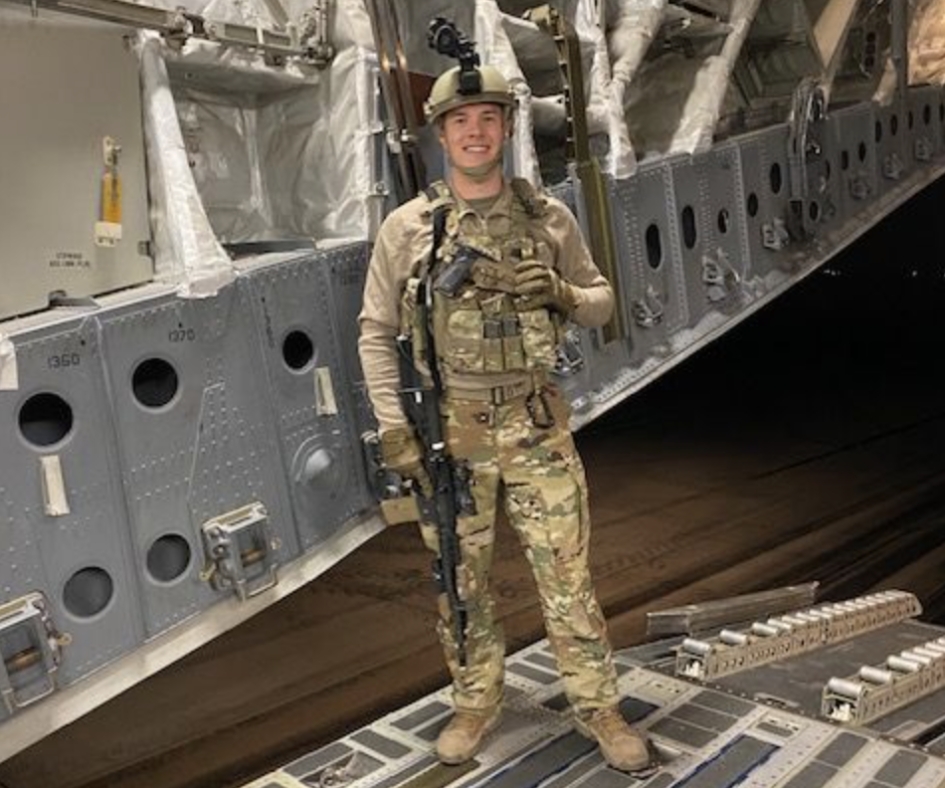 And then came July 14.
A deadly ambush in Fargo claimed the life of Officer Jake Wallin and left others, including Dotas and his trainee, gravely wounded. The details are well-documented in news reports. But when Dotas talks about it, he doesn’t dwell on the number of times he was shot or the name of the suspect.
“I try to focus more on the good,” he says. “How much closer I am with my wife. How much closer our department is. How the community wrapped around us.”
That support began almost immediately.
Family members drove in without hesitation, scooping up AJ and caring for him as if it had been planned all along. Fellow officers stopped by to take out the trash, mow the lawn, or simply sit for a while. Friends of Hannah’s coaxed her out of the hospital for an hour over lunch, giving her a brief reprieve from the unrelenting beeps and hushed voices of the ICU.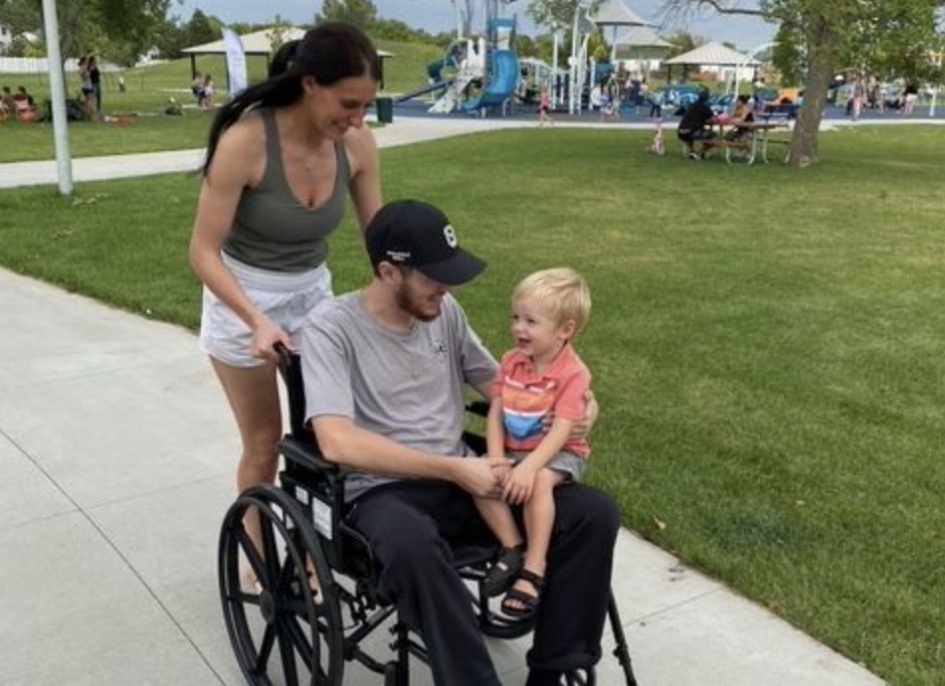 In those early days, one of Andrew’s doctors told him something that stuck: We can get you back to 110%. You can be better after this than you were before. It was the belief of others that kept him moving when his confidence faltered.
He spent about 30 days in the hospital, was discharged for a week, then readmitted briefly. Yet less than two years after the shooting, he was back in uniform and cleared for full-time duty, a comeback that even his doctors called remarkable.
On his first week back, Andrew admits there was a knot of nerves in his stomach. He wondered whether his skill would still be there when it counted. One of his calls that day was an overdose, critical enough that he had no time to think, only act. As he moved through the response, muscle memory took over. The training, the instincts, and the rhythm of the work he had honed over nearly a decade all came flooding back.
But something else had changed. Early in his career, his identity had been wrapped entirely in the badge.
Now, he says, “I can’t put my whole identity in that, because if it’s ripped away, that’s where someone can really crumble.” His foundation now rests on faith, on Hannah, on fatherhood. “That’s what I’ve learned the most from Posttraumatic Growth (PTG), being prepared for the valleys to come. In those high moments, build up your toolbox.”
One tool had been added to his toolbox just weeks before the shooting. As part of Fargo PD’s wellness team, Dotas attended a one-day Struggle Well training led by the Boulder Crest Foundation. Struggle Well is built on the science and practice of Posttraumatic Growth (PTG), helping service members, veterans, and first responders transform trauma into strength and purpose. He wasn’t in crisis at the time; he went because it was the right thing to do in his role.
A month after the course, in a hospital bed, Dotas asked for his Struggle Well hat. He’s worn it almost every day since.“It’s probably one of my favorite possessions,” he says, not for its material worth but for the conversations it starts and the reminder it carries. He calls it a “God thing” that he took the course right before the day that changed everything.
The black fabric has faded to a soft purple from constant wear and washing. For him, it’s more than a hat. It’s a bridge to someone else who might be hurting. “It’s opened up so many doors,” he says. “And it reminds me daily of the mindset that got me through.”
These days, Dotas is preparing to step into a new role as a school resource officer. The job will let him invest in young people the way an officer once invested in him. Inside the department, he uses his experience to reach other officers, offering perspective and understanding. “We’re all struggling in different ways,” he says. “If my story helps one person find hope or a new perspective, it’s worth it.”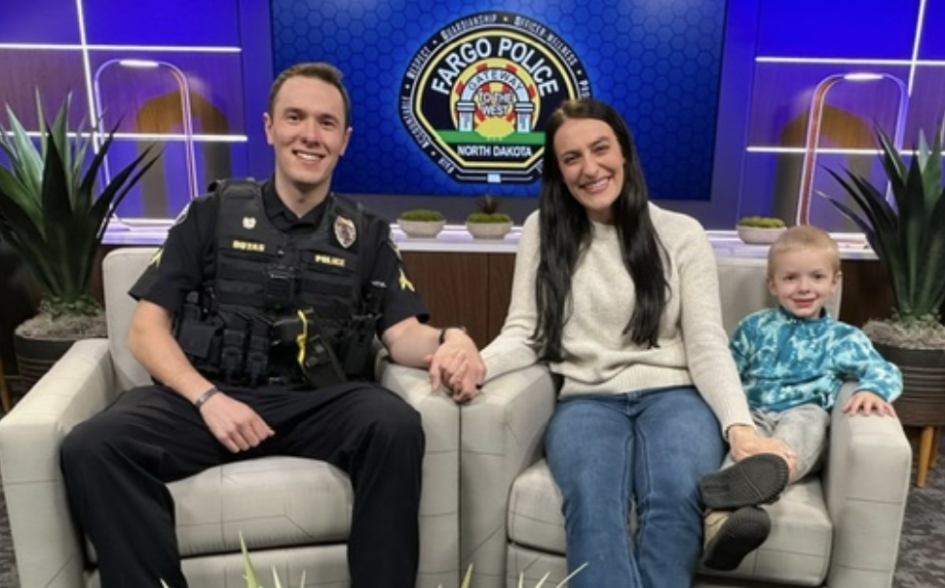 And in a city that has, by necessity, moved forward from that day in July, Andrew Dotas moves forward too — the same way he began that first morning after, blinking against the light, taking in what’s in front of him, and reaching up to adjust the brim of the faded hat that reminds him he can, and will, keep struggling well.
Struggle Well is more than a logo. It’s a way of life, a mindset, and a set of principles to turn life’s hardest moments into strength and purpose. To learn more about Boulder Crest Foundation and how Struggle Well supports our nation’s veterans, service members, and first responders, visit bouldercrest.org.
Your support powers life-changing programs offered at no charge to veterans, military, first responders, and their families. With your help, our Warriors won't just survive — they'll thrive.

We have received your email sign-up. Please tell us more about yourself.
