Your Gift. Our Mission. Their Future.
DONATE TODAY. Invest in the PTG programs that are transforming mental health for our nation's heroes.
Make a Gift

When Andy Riise tells his story, he doesn’t start with accolades. He doesn’t lead with the fact that he served 20 years in the U.S. Army as an Artillery Officer, including five in elite Special Forces units. Or that he was an Army Football player, a West Point graduate, or that he now works as the Mental Performance and Leadership Coordinator for the Chicago Bears.
Instead, he begins with something quieter: the belief that we’re all fighting battles in our minds, and that rising up isn’t about avoiding pain, but facing it head-on, with eyes open and heart engaged.
Long before he was known as the “Mental Toughness Coach,” Andy was a kid from a small town in Northern California. The son of a Vietnam-era soldier and one of five children, he grew up steeped in values of faith, service, sports, and the outdoors. He was high-energy, all-in, until a family tragedy changed the direction of his life.
At just 15 years old, Andy lost his brother-in-law, an Army officer and helicopter pilot, in a shooting outside their home. It was Andy’s first intimate exposure to trauma and the complexity of post-traumatic stress.
“I saw the ripple effects,” he said. “But I also saw how my sister (also an Army veteran) and our family found strength through it. They grieved, but they grew. That was the first seed of Posttraumatic Growth I ever saw.”
It wouldn’t be the last.
Inspired by that same brother-in-law, Andy set his sights on West Point. The path was not smooth. After struggling academically at the U.S. Military Academy Prep School, he was initially denied admission. But then, a miracle: a surprise academic waiver granted on graduation day. “To this day, I don’t know how it happened,” he said. “But it changed everything.”
At West Point, Andy faced another storm. A position change in football—from fullback to linebacker—triggered a period of deep struggle. He had built his confidence and identity around football. Losing that role shook his confidence and forced him to re-evaluate who he was beyond the position. He had to prove himself all over again, fighting feelings of disappointment and self-doubt.
It was then that he was introduced to the Center for Enhanced Performance, the birthplace of mental performance training in the U.S. Military. The practices he gained there became his new armor: confidence through adversity, composure under stress, and the realization that mental strength, like physical strength, must be trained like a muscle.
He didn’t realize it at the time, but that revelation shaped everything that followed.
Commissioned as a Field Artillery officer just 100 days before 9/11, Andy led soldiers through early operations in Iraq. The battlefield was unpredictable, intimate, and mentally taxing. Andy began to ask questions no one else around him seemed equipped to answer: How do you prepare the mind for war? And how do you accomplish the mission and bring people home whole?
In the years that followed, Andy became a pioneer in performance psychology across the military. He returned to West Point to teach at the same Center for Enhanced Performance, helped design the Army’s resilience training program alongside experts from the University of Pennsylvania, and provided Mental Performance training to Green Berets while serving as a Fire Support Officer and Joint Terminal Attack Controller (JTAC). He was making a mark. But privately, he was unraveling.
Andy knew the military was no longer the best fit for his and his family’s future. The demands, the pressure, and the inner weight he carried had begun to take their toll. It was time for a new mission—one that required rediscovering who he was and how to continue serving others outside the uniform.
During his military transition, Andy explored performance coaching in Major League Baseball (MLB) and later the National Football League (NFL). But beneath the surface, unresolved trauma, moral injury, and exhaustion lingered. He had a diagnosis of Traumatic Brain Injury (TBI), Post-Traumatic Stress Disorder (PTSD), and anxiety. He also had a son navigating his own identity and mental health crisis, and a family needing more of him than he had to give.
“I was waking up in the middle of the night, angry, drawn, and searching,” he recalls. “I was still trying to figure out who I was.”
The answer, he realized, was not in a uniform, a title, or even a résumé. “You are not what you do,” Andy said.
In the military, your uniform says it all: rank, experience, identity. It’s a walking résumé. But when the uniform comes off, so does that shorthand.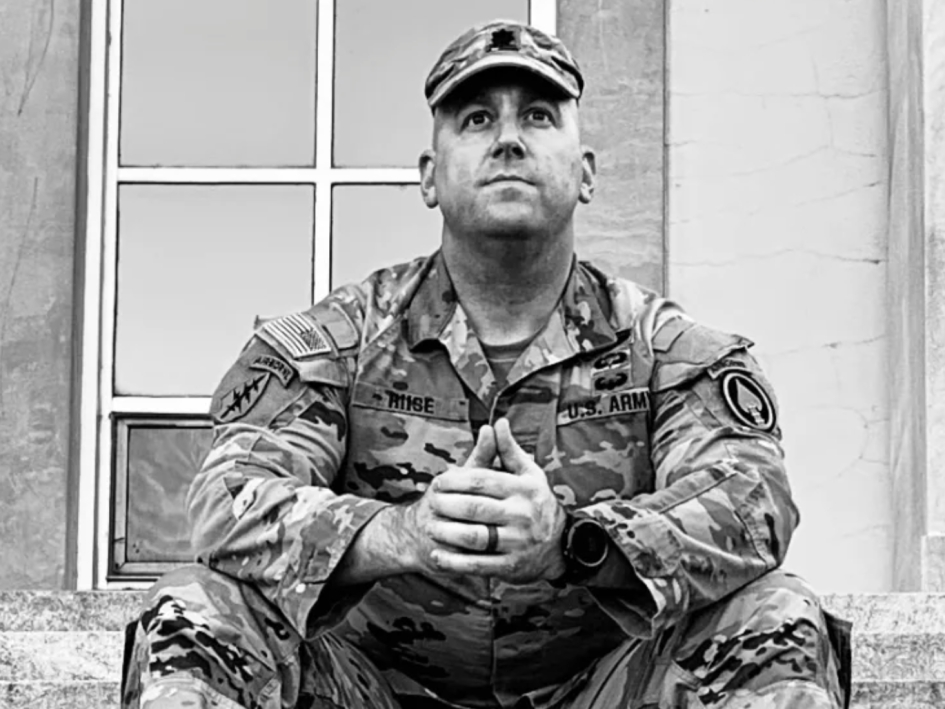
“You can’t rely on it to speak for you anymore,” he continued. “You have to figure out who you really are, and how you want to show up in the world.”
Andy lives by a new framework—one he developed not just to teach others, but to live by himself. He calls it SERVE:
S – Show Up
E – Empathize and Engage
R – Respect
V – Value
E – Evaluate Progress
He uses this approach along with the 4C Model of Mental Toughness to guide athletes, veterans, and everyday leaders in building a life beyond performance. It’s also how he honors the struggle that shaped him—through depression, shame, and doubt—and turned it into something solid he could stand on.
That’s when Warrior PATHH entered his life.
Initially, Andy arrived wearing the coach’s hat, curious about the curriculum and prepared to evaluate it with a professional lens. But from the first day, everything shifted.
"The Boulder Crest team told me: 'Don't go in as a coach. Go in as a participant. Do this for you.' And they were right. I needed it more than I realized."
Andy dropped the teacher persona and became the student. At Warrior PATHH, he stopped trying to lead and finally gave himself permission to feel. He confronted two decades of service, guilt, and a fractured sense of identity. He opened up. He got honest. And he started to rise again, like Team Phoenix—the name his cohort adopted.
The experience didn’t erase his struggles. It gave them shape. It gave him language, principles, and a renewed sense of self. And it arrived during a season when his son needed him most. As both of them navigated their mental health challenges, Warrior PATHH gave Andy the clarity and capacity to rise and be present where it mattered most.
Today, Andy continues to coach professional athletes, teach college students, and deliver keynote speeches to audiences seeking direction and resilience. He translates battlefield-tested practices into everyday performance, helping others rise above adversity to fight and win the war within.
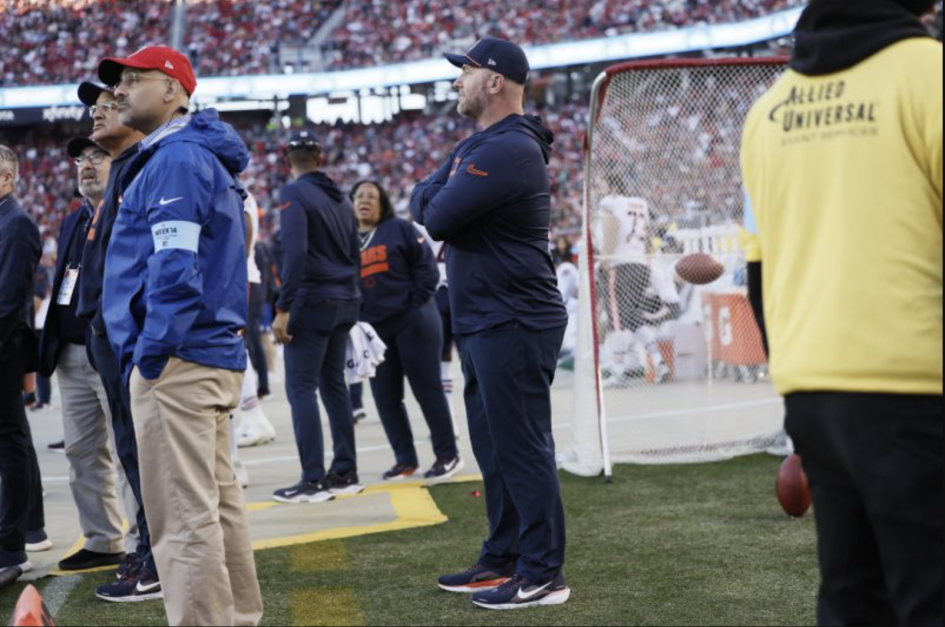
He speaks to the unique parallels between veterans and elite athletes—populations whose identities are forged through discipline, sacrifice, and team. Both struggle when the uniform comes off.
“When we leave on our terms, we have a better shot,” Andy says. “But most don’t get that. They get cut, injured, or forced out. And when that happens, we ask: what now? But we should be asking: who am I?”
It’s not an easy question. But it’s the one that matters most.
Andy has come to understand that answering it requires humility, courage, and a willingness to begin again.
His identity is no longer tied to rank or reputation. He’s a husband, a father, a coach, and a guide. When he asks himself, “Who am I?” the answer is clearer now.
“It’s in my name,” he says. “I’m Andy Riise—a person ready to rise.”
You can rise up, too. Boulder Crest offers transformative programs like Warrior PATHH and Struggle Well, designed to help active-duty military, veterans, and first responders transform struggle into strength. Learn more at bouldercrest.org.
Your support powers life-changing programs offered at no charge to veterans, military, first responders, and their families. With your help, our Warriors won't just survive — they'll thrive.

We have received your email sign-up. Please tell us more about yourself.