Your Gift. Our Mission. Their Future.
DONATE TODAY. Invest in the PTG programs that are transforming mental health for our nation's heroes.
Make a Gift

A gunshot rang out through the night, a pop that punctured the stillness in the air. The muzzle flash briefly illuminated the darkness, painting the shadows in strokes of light.
More followed. Gunfire crackled throughout the neighborhood. Faces peered out from windows of neighboring homes, curtains pulled back just enough for wary eyes to catch glimpses of the chaos unfolding outside.
Officers from the Charlotte-Mecklenburg Police Department’s Violent Criminal Apprehension Team (VCAT) moved in sync, their voices cutting through the night. Tactically-clad SWAT negotiators arrived and surrounded the home, silently signaling with hand cues and gestures.
Then, as quickly as it began, it was over.
As red and blue lights danced across the yard, Sergeant Donnie Penix lowered his weapon and willed his mind to slow and reassess the scene. It was January 3, 2016, and his team was searching for a homicide suspect in a West Charlotte neighborhood. When Penix and his VCAT team attempted to serve a warrant, the suspect opened fire, hitting and wounding Officer Jessica Zinobile.
Penix and his officers fired back, fatally shooting the suspect. He was pronounced dead at the scene. Officer Zinobile was taken to Carolinas Medical Center to be treated for her injuries, described as “non-life-threatening.”
But in the wake of those chaotic moments in that sprawling front yard, a weight settled across Donnie Penix’s shoulders, a burden of could-have, should-have, would-have that would alter the course of his career and life from that day forward.
 “I carried that weight around for a long time,” he said. “That it was my fault. It was my decision to go back that night and go and look for this gentleman. And it weighed heavily on me and the fact that I’d taken someone’s life,” he continued.
“I describe it as all these traumatic events I’ve seen over my career, all these critical incidents, it was like a bucket of water filling up. And I would tip enough out just to get by. After that shooting, I couldn’t hold the water back anymore and it started overflowing.”
By January 9, 2016 — just five days after the incident — Donnie was off administrative leave and back at work. In hindsight, that was a mistake.
 Conversations with his coworkers became stilted, careful, as if they weren’t sure what to say. His world began to shrink as he withdrew from family and friends, unsure of how to put his emotions into words. He didn’t want to be the one to bring it up. And maybe, deep down, he feared what would happen if he did.
“My captain at the time looked at me and said, ‘I know that shooting messed you up.’ It was the first time I heard that outside of my own head. And something in me just broke,” said Donnie.
That night, he went home, stepped into the garage, and laid down his gun and uniform. He turned to his wife and told her he was done — he was either going to quit or take his own life.
Donnie did everything he was supposed to. Therapy. EMDR. The clinical approaches helped him fight back the suicidal thoughts, but they didn’t help him regain control of his life. The anxiety, the anger, the rage — it never fully went away. He could temper it, but he couldn’t shake it.
Then, at a conference in San Antonio — one he barely remembers signing up for — he met Josh Goldberg and Rob Brandt from the Boulder Crest Foundation. They gave a 30-minute presentation on the Struggle Well program.
Something clicked.
When Donnie got home, he emailed Rob from Boulder Crest, full of questions. The more he learned, the more it made sense. That same year, Donnie’s police department hosted two Struggle Well workshops, something they had never done before. It felt like fate.
By October, just a month after that chance encounter at the conference, Donnie was sitting in his first two-day Struggle Well class. And something in him shifted. “I remember very distinctly how that class impacted me,” he said.
“Yes, it’s about navigating life’s ups and downs,” Donnie explained. “It’s about understanding what posttraumatic growth really is, but for me? It saved me from me.”
That night, he emailed Sam Espinosa, who ran Boulder Crest’s Train-the-Trainer course.
It wasn’t long before Donnie was invited to take part.
“It became natural to me. Everything I was trying to talk about, I had lived through,” Donnie said. “Every time I participate in this program, it’s like therapy for me. And I’m so humbled to be part of it.”
Now, Donnie is a Struggle Well guide and speaks to every new class of police recruits a few weeks before they graduate, sharing his journey through posttraumatic growth.
By engaging them early, he doesn’t just prepare them for the challenges ahead — he takes a proactive role in shaping the future of law enforcement.
Donnie’s approach is preventive. His mentorship helps recruits understand that learning to navigate life’s ups and downs can be as vital as any tactical skill, potentially reducing the need for significant interventions later on. In doing so, he not only fosters resilience but also inspires a shift toward a healthier, more balanced mindset — both on and off duty.
He hopes to pass it on what he’s learned from his experiences, and to show them there’s another way.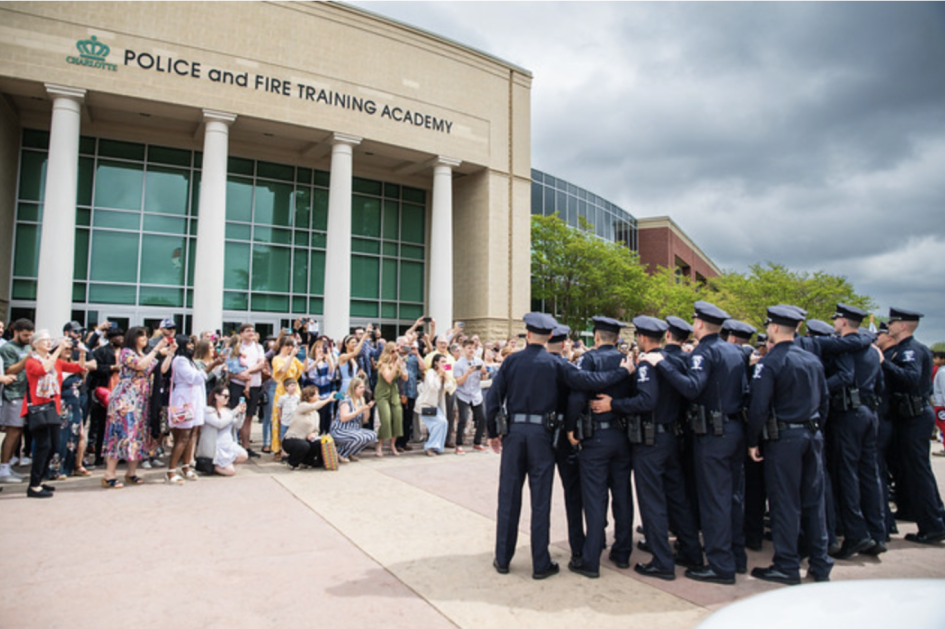 That wasn’t something he had growing up.
His father, also a police officer in the same department, had been involved in a shooting at nearly the same point in his career. His advice? “Just don’t think about it.”
That was it. That was all they had back then. Suppress it. Bury it. Move on.
Now? His department offers Struggle Well 12 times a year — six times through the department and six times through the county. Donnie wishes it was more. He knows how much it could change lives.
“I knew this program worked when one of my employees went through it,” Donnie shared.
“He’s an incredible K9 handler, an amazing guy. His father and my father passed away six months apart, both from dementia. We had a unique bond. During a session of Struggle Well, we were going around the room when he broke down. Then, he pointed at me and said, ‘I want what he’s got. I’ve seen a change in that man, and I want that.’”
Donnie had felt something change within himself, but hearing it from someone else? That was proof.
This program works. It absolutely works.
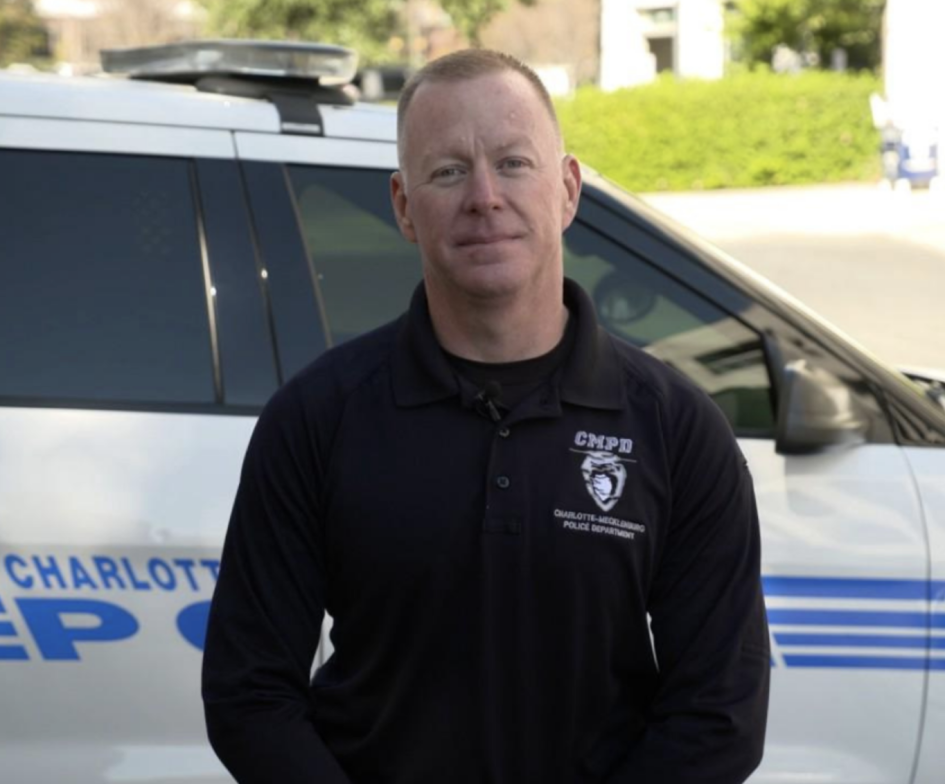
After the shooting, when Donnie’s captain looked at him and said, “I see a change in you,” it was a warning. A concern. A sign that something was wrong.
Now, years later, another officer looked at Donnie and said, “I see a change in you” — and this time, it was hope. This time, it was the kind of change someone else wanted for themselves.
And that is what Struggle Well is all about.
“In our profession as first responders, everyone is exposed to trauma — whether it’s been one year or twenty — we all carry the weight of what we’ve seen,” Donnie said. “For me, it was 28 years of it. And the only way I thought I could escape that trauma was to take my own life.”
He doesn’t soften the truth. He shares his story because someone needs to hear it.
“I know what the front side of a pistol feels like on the back of my teeth,” he admits. “And I share that because I know I’m not the only one.”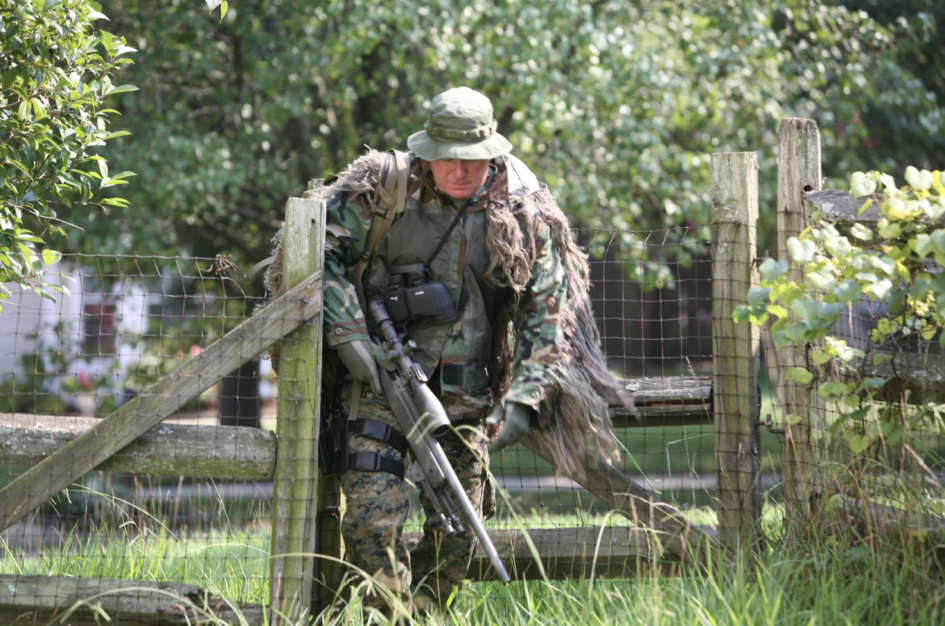
“We all struggle,” he continued. “Not just in this job, not just as first responders, but as human beings. We all carry something heavy, something painful. Struggle Well doesn’t erase it, but it gives you the tools to move forward, to grow from it instead of letting it break you.”
He thinks back to that 30-minute presentation in San Antonio, the email he sent, the two-day class that reshaped his thinking, and the grueling four-day train-the-trainer that solidified his purpose. It all started with one decision — to reach out.
“As police officers, we spend our lives helping strangers. We fix things. Everyone else comes first. But who fixes us?”
That question nearly cost Donnie everything. Now, he knows the answer.
The change he spent years searching for is real. He’s proof of it. But when he needs a reminder, he thinks of his friend — the one who pointed at him across the room and said:
“I want what that guy has.”
Struggle Well is a prevention-focused program based on the science of Posttraumatic Growth. By partnering with first responder agencies and active serving military units, the Boulder Crest Foundation is fundamentally changing the culture from the inside-out. Struggle Well is changing lives. If you’re ready to take the first step, visit BoulderCrest.org to learn more or request training.
Continue reading more about Posttraumatic Growth in our resource library.
PTG Resource CenterYour support powers life-changing programs offered at no charge to veterans, military, first responders, and their families. With your help, our Warriors won't just survive — they'll thrive.

We have received your email sign-up. Please tell us more about yourself.
