Your Gift. Our Mission. Their Future.
DONATE TODAY. Invest in the PTG programs that are transforming mental health for our nation's heroes.
Make a Gift
Army musician Dana De La Rosa spent years hiding her pain behind discipline and deployments. At Boulder Crest, she discovered that true strength comes from honesty, connection, and growth.

Dana grew up outside Green Bay, Wisconsin, where life swung between feast and famine. Harvest brought new shoes and a full pantry. Winter brought scarcity, dark days, and silence that pressed as heavy as the snow.
Her mother worked constantly, her stepfather was often gone, and caring for younger siblings often fell to her. By the time she reached college, freedom felt like oxygen. What she didn’t know was how quickly it could suffocate.
The scholarship she’d earned vanished under the weight of being on her own for the first time. Returning to the farm wasn’t an option, so Dana auditioned for the Army as a clarinetist, passed, and shipped off to basic training. It was supposed to be four years, a way to pay for school and figure out her next step. Instead, it became a career.
After the School of Music in Virginia Beach, she reported to her first duty station. She learned Army standards for music and ceremony, but also trained as a soldier — qualifying with weapons, planning missions, and running convoy security. Eight years in, she transitioned from clarinet to professional vocalist. She trained herself to deliver the national anthem the same way every time: straight and unembellished, the way taps is played. “There’s no room for error,” she said. “The stakes are too high.”
The Army rewarded her precision and discipline. For the first time in her life, Dana felt seen. Her work ethic was recognized. She belonged. But the rhythm of her career masked an undertone she hadn’t addressed: the griefs, losses, and traumas she’d never processed.
The pressure mounted just before deployment when a soldier in Dana’s squad died by suicide. As their leader, she didn’t know how to grieve; she only knew how to push forward. She redirected her pain into caring for those who remained, determined that her squad would succeed in the mission ahead. But stress followed her home. During that period, Dana faced a cascade of losses and burdens. She became pregnant and was classified high-risk, which meant being pulled from the mission she had poured herself into. While she was navigating that unexpected reality, her husband’s deployment was extended from twelve months to fifteen.
Then her grandmother, the woman who had anchored her childhood, passed away. Dana couldn’t attend the funeral because of her medical restrictions. Her life unraveled — grief she couldn’t process, responsibility she couldn’t share, and isolation while her husband remained deployed.
By the time her husband returned from deployment, Dana had reached a breaking point. She had mapped out a detailed plan to end her life. It wasn’t a cry for help; it was an exit strategy.
What interrupted that plan wasn’t a program or a diagnosis. It was presence. Her mother-in-law came to stay with her in those weeks before her husband returned. That steady companionship created just enough of a crack in the darkness to keep Dana here.
No one else knew. Dana had been trained in suicide prevention, and she knew exactly what not to show.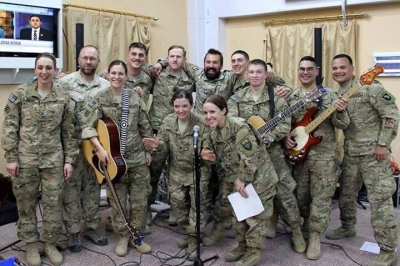 Her answer, once again, was work. She volunteered for deployments, built teams, and became indispensable. She pushed herself to be the best, rewarded by the Army but avoiding home. On the outside, she looked like the model of resilience. On the inside, she was hiding in nobility, and it was costing her everything.
Between Dana and her husband, there were eleven deployments. She went five times, he went six, one of them together. Deployments meant paychecks and praise. Home meant conflict: a defiant stepson, a young son battling suicidal thoughts, a marriage fraying under pressure.
When the Army finally stationed them at Fort Huachuca, a non-deployable post, it was meant as a break. Instead, it stripped away Dana’s purpose. Without a mission, she felt caged. Her marriage was hanging by a thread, and her family was in crisis. That’s when Dana noticed a mentor, an admired sergeant major she trusted, transition from contract work into a more meaningful role with Boulder Crest. For Dana, that decision carried weight.
“If someone of his quality would choose to work there,” she thought, “there has to be something to it.” She began researching the Foundation. The location looked beautiful, but what drew her in wasn’t the scenery. It was the promise of training.
“I didn’t want to be chaptered out. I didn’t want to be medicated. I wanted to start dealing with my demons.”
She enrolled in Warrior PATHH. At Boulder Crest Virginia, Dana finally began to face what she had spent years outrunning. The program didn’t erase her pain, but it gave her a new way to carry it — with honesty, discipline, and the support of others who understood.
As life tends to do, the challenges didn’t stop once she returned home. Ninety days after her husband retired, he was in a serious motorcycle accident that shook their family. Soon after, their closest friend Freddy, an Army bandmate who felt like family, died by suicide. Sixty days later, their youngest son was rushed to the ER. Doctors found a ten-pound cancerous tumor on his liver and removed sixty percent of the organ in surgery.
For Dana, it was one of the darkest moments of her life. Watching her teenage son fight through pain and uncertainty brought every buried fear to the surface. “It could have broken us completely,” she said. But instead of collapsing, she and her husband turned back to what they had learned. Dana had already started the journey at Boulder Crest. She urged her husband to do the same, and just days after Freddy’s death, he enrolled in Warrior PATHH. He returned transformed. Together, they began facing hardship side by side, rather than avoiding it.
Their son recovered. The scans came every ninety days, then every six months. With each clean result, Dana could breathe a little deeper. Today he is strong, healthy, and, like his parents, proof that struggle can be met with growth.
Dana herself came back to Boulder Crest first as a PATHH Guide, then as a Struggle Well trainer. She now works full-time with the Foundation, helping others uncover what she once carried: the hidden beliefs that drive us until we name them. For Dana, it was the conviction that if she truly knew someone—her soldier, her friend Freddy—she should have been able to save them.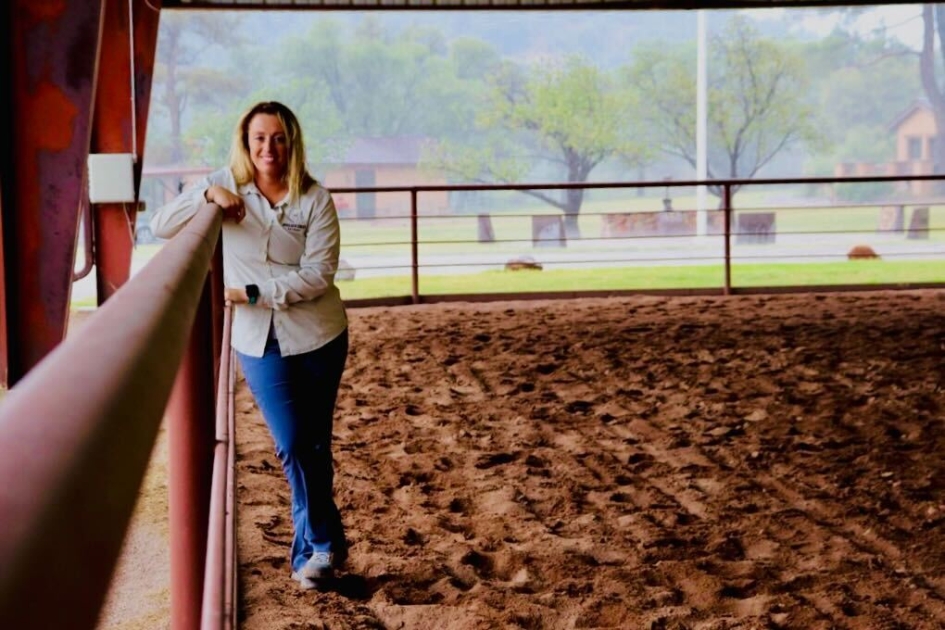 “Of course we can’t save everyone,” she said. “But I didn’t realize that was the weight I was carrying until I uncovered it. That belief shaped everything. And naming it changed everything.”
Music remains a thread in her life, both as memory and metaphor. The old drive to hide in nobility and seek validation through performance has given way to something steadier.
“Life doesn’t stop throwing things at you,” she said. “But I know now that we can get through it. We’ve proven it. And that changes everything.”
Like music, life requires both discipline and heart. Dana once hid behind the noble notes of service, hoping the sound alone would be enough. Today, she sings a different song: one of honesty, connection, and growth. And it’s a beautiful tune.
If you or someone you know is struggling, you are not alone. Learn more about Warrior PATHH and Struggle Well programs at BoulderCrest.org.
Your support powers life-changing programs offered at no charge to veterans, military, first responders, and their families. With your help, our Warriors won't just survive — they'll thrive.

We have received your email sign-up. Please tell us more about yourself.