Your Gift. Our Mission. Their Future.
DONATE TODAY. Invest in the PTG programs that are transforming mental health for our nation's heroes.
Make a Gift
Deputy Chief Patrick Fale carried a vow he made at twelve years old into decades of fire service leadership. Warrior PATHH and Struggle Well helped him set it down and bring hope to hundreds of first responders.

The boy steps off a yellow bus and into a silence he does not yet understand. A deputy’s hand guides him across the street. Inside, he hears his mother’s grief before he sees it. Patrick Fale was twelve when his father, a beloved lieutenant in the local fire department, took his own life. It was devastating for his family and for the department.
In that moment, Patrick made a promise to himself: be steady, be good, don’t add weight to a house already sinking.
Years later, he would return to the same firehouse where his father once served, growing up in the company of the men and women who had known him. The career that began as a way to honor his dad became its own calling. And yet, the promise he made as a child stayed with him, shaping the way he carried responsibility, command, and the crushing weight of leadership.
Patrick watched the profession change in meaningful ways: a larger, more diverse workforce and nearly fifty women now serving “on the line,” bringing skills and emotional intelligence the department needed. He also watched the calls surge and the danger escalate. Tualatin Valley Fire & Rescue (TVF&R) now answers about 60,000 incidents a year. Roughly 80 percent are medical, and only about 2 percent are working fires. Behavioral health crises have climbed to nearly a third of all calls.
Leaders are supposed to absorb that weight. During COVID, Patrick was the operations chief. Protocols stacked up. Protective gear never came off. “Orderbacks” spiked — dozens and dozens of firefighters finishing a 24-hour shift only to be told they couldn’t go home because there was no one to fill their seat. Morale sank. It wasn’t a cliff but a slide, so gradual he barely noticed until it had reshaped him.
When Boulder Crest entered his life, Patrick arrived skeptical. He had seen programs that promised the world and delivered platitudes. He was invited to a Montana gathering with chiefs, researchers, and the Boulder Crest team. Navy SEAL Harry Bologna noticed him almost immediately. “I can help you,” Harry said. “But you’re going to have to go through Warrior PATHH.” Patrick agreed. He would not ask his people to do what he wouldn’t do himself.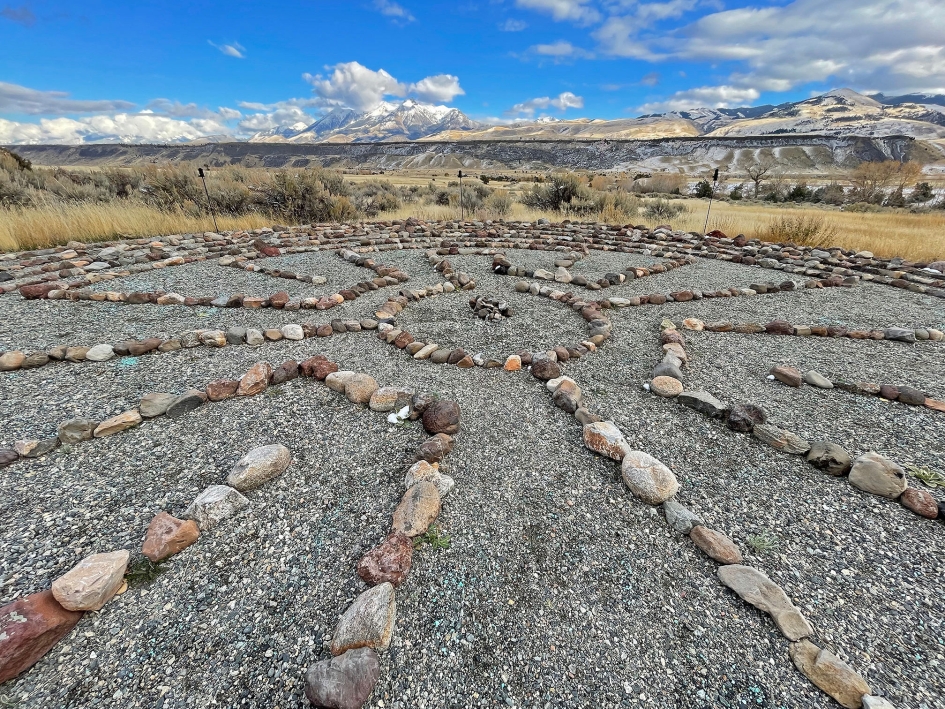
The first exercise that cut through his defenses was a labyrinth. Each participant picked up a rock, a physical stand-in for a burden they couldn’t set down, then walked a winding path while considering what it meant. At the center, they were to put the rock down and share.
Patrick picked up his rock and felt the air leave his chest. The weight was more than stone — it was failure, sudden and absolute. In an instant, he was twelve again, stepping off a yellow bus, guided across the street by a deputy, listening to his mother’s cries before he saw her face. The vow he made that day — to never be a problem, to carry his weight silently — wrapped around him once more.
Decades later, in the middle of the labyrinth, he realized he had never set it down. He reached the center, and the rock stayed in his hands.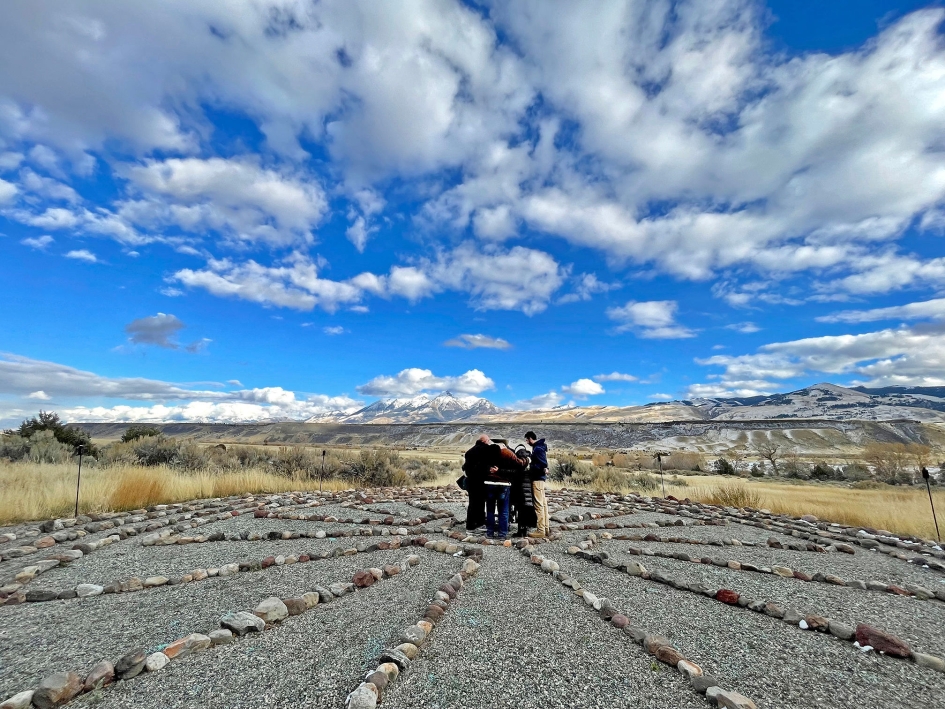 Shame is corrosive in any life and lethal to leadership. Warrior PATHH gave Patrick what he could not grasp in that moment: the perspective to see how the pressure of command had fused with the child’s promise never to fail. The coping that followed — isolating, drinking, shrinking his world — wasn’t about one call or one crisis on duty. It was the old promise still running his life.
The program’s strength, Patrick says, is that it refuses to let people be victims. Boulder Crest guides lead with their own disclosures, and then they challenge participants to get up, look at their behavior, and take ownership. Then come the steps: build consistency, create healthy patterns, and put their struggles into the context of a whole life.
A Life Walk made that context vivid. Guides asked Patrick and his cohort to retrace the timeline of their lives, pausing at the years that had left marks. For many, it was adolescence — the awkward years, the losses, the moments when they first learned to hide pain.
At the end of the walk, a guide stepped in to speak aloud the words they had needed then: you’re not alone, this isn’t your fault, you matter.
From there, they walked forward two years at a time, imagining birthdays not yet reached, decades still ahead. The path carried them all the way to 90, a full life stretched out in front of them, not defined by a single wound but by growth. The exercise was bracing — and freeing. For Patrick, it opened space to see his marriage, his children, his work, and his people differently. He could see the department’s crises as system problems to be solved rather than personal proof that he was failing.
What happened next is the part that ripples.
Patrick brought Struggle Well to TVF&R, championed by a chief who noticed that something had changed and told him to bring it home and then take it statewide. Nearly 400 of the department’s 600 members have completed Struggle Well.
More than 30 have gone through Warrior PATHH; almost all are back at work, healing, and contributing. The culture has shifted from “this is crushing us” to “this is the mission, and we choose how we respond.” Leaders talk openly about fitness, sobriety, family, and the daily habits that keep them healthy. Crews are still exposed to trauma, but they’re not left to navigate it alone or pretend it doesn’t exist.
Patrick speaks to fire chiefs and police leaders who are worn down by command. He reminds them that you cannot take care of your people if you refuse to take care of yourself. When executive teams go first, commit resources, and model new habits, rank-and-file buy-in follows.
Boulder Crest made Patrick’s life bigger. He is a deputy chief who leads with perspective. He is a husband and father who comes through the front door present and engaged. He is a peer who checks on colleagues not only in the first hard days but in the quiet weeks and months when support thins out. He is a friend to the people he met in Montana — first responders and combat veterans who still talk every morning years later. He is a servant to the programs that served him.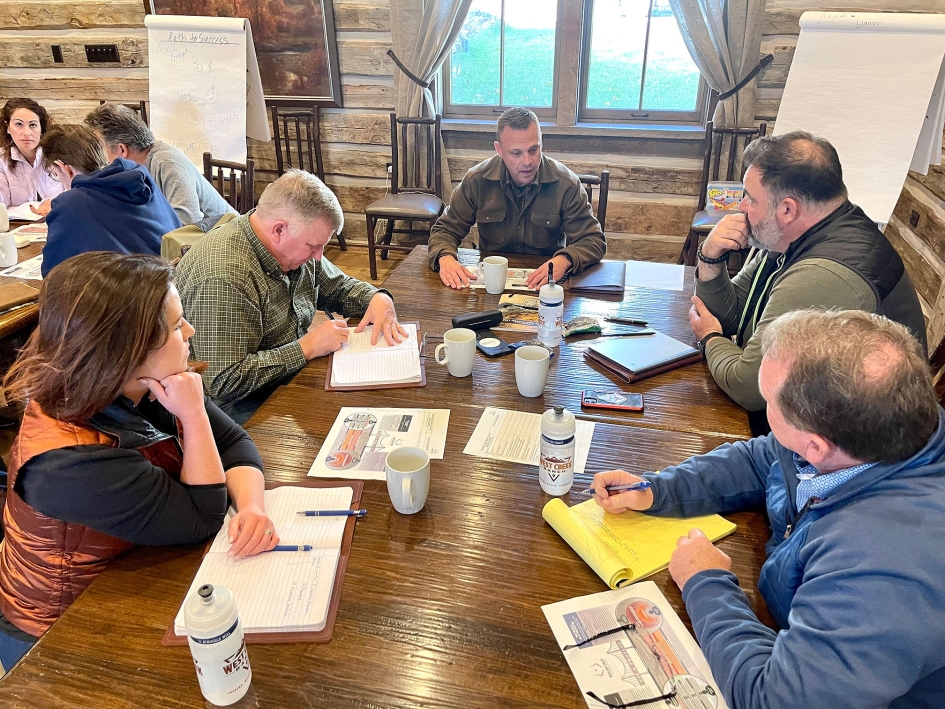
“I’m near the end of this career, but not anywhere near the end of my service.”
The next season will be defined by two things: service to those who serve, and adventure with his wife and children.
Patrick’s impact is already measurable: in the number of TVF&R members who have been through Struggle Well, in the clinicians now trained in Posttraumatic Growth, in the firefighters and medics who returned to work and finished their careers on their terms.
If you ask him what Warrior PATHH gave him, he will tell you: context, accountability, and a community that refuses to leave you stuck in the middle of the labyrinth. If you ask him what Struggle Well has given his department, he will tell you: a shared language for hard things and a choice to respond in ways that build life rather than diminish it.
Patrick once believed the way to honor his father was to mirror his footsteps. Today, he honors him by breaking the old rule. He is no longer trying to be weightless or problem-free. He is a leader with feelings and a plan, a husband and father present at home, a servant who understands that service without self-care is a fuse burning at both ends.
This is what transformation looks like at Boulder Crest. It turns a private vow into a public good. It turns skepticism into stewardship. It turns a rock you couldn’t set down into a lesson you pass on. And it turns the end of one career into the beginning of a broader life, defined by purpose, courage, and the steady work of helping others do the same.
If you or someone you know is ready to transform pain into purpose, explore Boulder Crest’s Struggle Well program or apply to Warrior PATHH. The journey begins with a single step.
Your support powers life-changing programs offered at no charge to veterans, military, first responders, and their families. With your help, our Warriors won't just survive — they'll thrive.

We have received your email sign-up. Please tell us more about yourself.