Your Gift. Our Mission. Their Future.
DONATE TODAY. Invest in the PTG programs that are transforming mental health for our nation's heroes.
Make a Gift
Grand Lake, Colorado, is the kind of place where people go to disappear for a while.
Tucked beside the western entrance of Rocky Mountain National Park, the town feels untouched by urgency. The streets are small. The mountains loom impossibly close. In the summer, tourists wander into ice cream shops wearing hiking boots and sunburns, while locals move at the kind of pace that reminds you not every aspect of life has to be rushed.
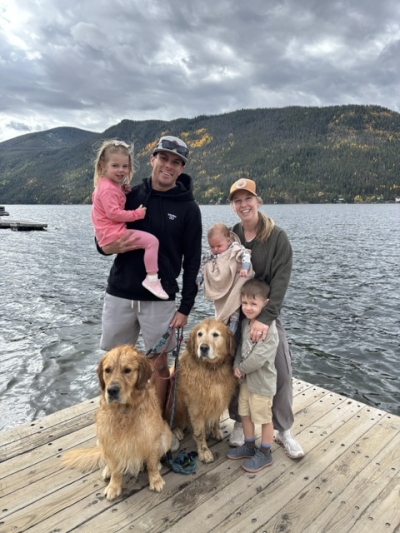
Nick Rodriguez was there with his family when it happened.
His wife and children were back at the Airbnb. Nick had volunteered to grab pizza for dinner. Somewhere between the counter and the soda cooler, he noticed another man across the restaurant wearing a Team Leadville shirt.
He stared a little too long.
There was something familiar about him. Nick knew they had crossed paths somehow, though he couldn’t place it at first.
Finally, he walked over.
“Are you a West Point grad?” he asked.
The man laughed.
“Yeah,” he said. “Is your name Nick Rodriguez?”
It was Tony Hofmann.
The two had connected years earlier online through overlapping military circles and endurance sports, but had never actually met in person. Somehow, in a tiny mountain town nearly a thousand miles from Tony’s home in Kansas City, they found themselves standing face-to-face beside a pizza counter.
Looking back now, Nick still laughs at the absurdity of it all.
“Tony saw his opportunity,” he said. “He was like, ‘Nick, you’re already out here. You should do Team Leadville.’”
Nick gave him what he now calls a “soft yes.”
By this June, Nick will stand at the starting line of the Leadville Marathon as part of Team Leadville, helping raise awareness and support for veteran suicide prevention through Boulder Crest Foundation.
For Nick, the event represents the kind of community many veterans spend years searching for after service ends.
He grew up in Southern California with no direct family ties to the military. But like many from his generation, the events of September 11, 2001, shaped the way he viewed service from a young age.
“I realized the life that I live here in the U.S. is very rare,” he said. “And it comes at a steep cost.”
His father, a Cuban immigrant, helped reinforce that perspective. Watching his family’s appreciation for the freedoms and opportunities available in the United States gave Nick a deeper understanding of service and sacrifice long before he ever put on a uniform.
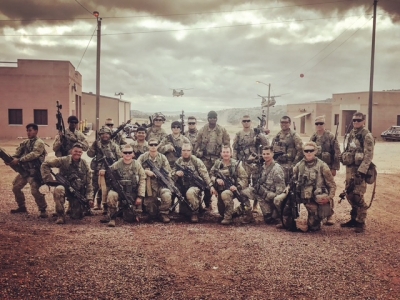
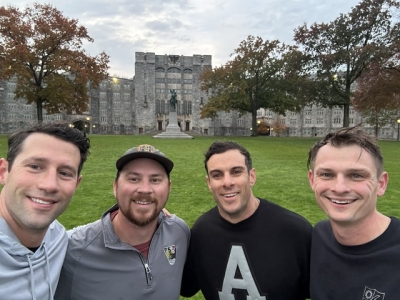
Nick eventually attended United States Military Academy, where the military became more than a career path. After graduating and branching infantry, he spent the next several years leading soldiers, completing Ranger School, deploying overseas, and competing in the Army’s Best Ranger Competition in 2019.
If he could have stayed in that environment forever, part of him probably would have.
“You’re always moving,” he said. “You’re always training. You’re always preparing.”
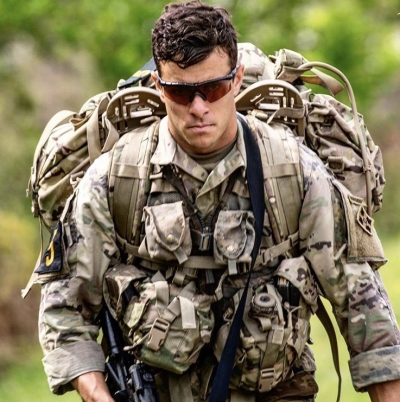
That is part of what makes transition so difficult for many veterans. Even when leaving service is the right decision, there is still loss attached to it.
For Nick, that transition came in 2020.
Originally, he planned to continue pursuing the Special Forces pipeline. But after years of deployments, training rotations, and time apart, he and his wife Ashley began having harder conversations about the future they wanted together.
“At this point we had spent about 15 months geographically separated,” Nick said. “And she finally asked me, ‘When are you going to raise your kids?’”
The question forced him to reevaluate everything.
For years, much of his identity had been tied to achievement inside the military. But now another role was beginning to matter more.
Husband. Father. Partner.
“I had to ask myself, am I doing this for ego or am I doing it for the right reasons?” he said.
Nick believes he was fortunate in many ways during his transition. He had supportive leadership. A strong marriage. Close friends. A church community in Colorado Springs. He also found work that still allowed him to serve others in a meaningful way.

“I think my story is probably more the exception than the norm,” he said.
Over the years, Nick has lost fellow soldiers, leaders, and friends to suicide. Some struggled with depression, PTSD, anxiety, or the invisible weight that can follow years of service. Others wrestled with the loss of identity and community that often comes after leaving the military.
“All of us know somebody,” he said quietly.
That reality is part of what drew him toward Team Leadville.
The Leadville Marathon itself is demanding enough. At elevation, every mile feels heavier. Every climb asks more of you than the last. But Nick believes the deeper challenge mirrors something many veterans experience long after they return home.
“There’s this constant weight of saying, ‘I don’t know if I can take another step here,’” he said.
Then he paused and offered the analogy that has stayed with him throughout training.
“How can we build support systems for people who are on mile 10, 12, 13, 14 and don’t want to go anymore?”
For Nick, that question sits at the center of Team Leadville’s mission.
The goal is not simply to finish a race or post an impressive time. The goal is to show people they do not have to carry difficult things alone.
“There’s value in doing challenging things with people you care about,” he said. “That inherently deepens relationships.”
That philosophy is also what makes Team Leadville different. In many endurance events, the focus centers on individual accomplishment. Personal records, placement, and competition. Team Leadville operates differently.
Some years, not every member finishes. Tony Hofmann has never hidden that reality from the team. The point is not perfection. The point is continuing to show up together anyway.
For Nick, there is something deeply meaningful about that approach, particularly within the veteran community.
“You often lose that sense of community when you get out,” he said. “You lose the people who understand your experiences without needing everything explained.”
That absence can become isolating.
Nick sees it often when veterans attempt to transition back into civilian life while carrying experiences that few around them can fully relate to. Many miss the closeness that came from shared hardship, shared responsibility, and shared purpose.
“There’s a camaraderie that comes with doing difficult things together,” he said.
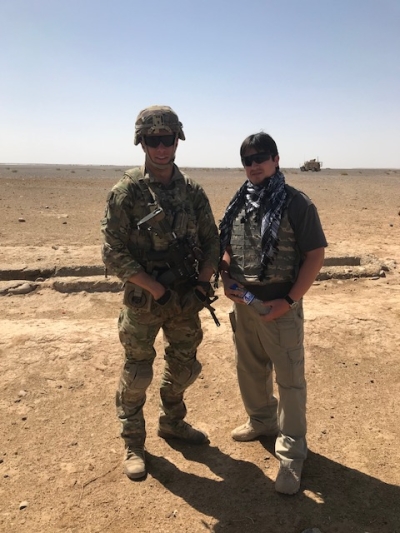
Now, through Team Leadville, Nick sees an opportunity to build some of that connection again while supporting a cause that has affected far too many people he cares about.
These days, his life looks very different than it once did.
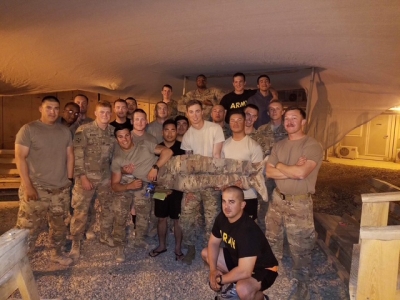
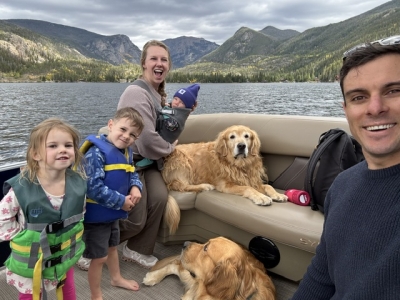
Instead of deployments and training rotations, most of his energy goes toward raising three children alongside Ashley in Colorado Springs. Their dogs, Ranger and Scout, still serve as reminders of the chapter that shaped so much of who he became.
And while he still misses parts of military life, he no longer sees transition as leaving one identity behind completely.
Instead, he sees it as learning how purpose evolves.
“The dream can change,” he said.
Soon, Nick will head to Leadville alongside Tony Hofmann, the man he unexpectedly ran into in a small pizza shop in Grand Lake, and a team connected by far more than endurance sports.
At some point during the race, exhaustion will settle in. The altitude will press against every breath. Someone will inevitably hit the wall.
Somewhere around mile 14, Nick will likely look to his left and right and see people continuing to move forward beside him.
In that moment, the race will become about something bigger than running.
And that, Nick believes, is exactly the point.
Your support powers life-changing programs offered at no charge to veterans, military, first responders, and their families. With your help, our Warriors won't just survive — they'll thrive.

We have received your email sign-up. Please tell us more about yourself.