Your Gift. Our Mission. Their Future.
DONATE TODAY. Invest in the PTG programs that are transforming mental health for our nation's heroes.
Make a Gift
Before he ever wore the badge, Johnny Fisher knew what it meant to endure.
“I come from two parents who struggled with addiction,” he said. “I sometimes saw things a kid shouldn’t see. But they were also loving and supportive in their own ways, and after they sought treatment, they both became better people and parents.”
The person who brought him the most stability was his grandmother, Nana. She grounded him during the hardest years. “She was my rock and guardian angel,” Johnny said. “I relied on her to keep me centered.”
Even in the midst of the challenges, he found something to aspire to. The TV show CHiPs — with Ponch’s swagger, Jon’s calm confidence, and those roaring motorcycles — offered a glimpse of what life could be. “That was the first time I saw cops who looked like good guys,” he recalled. “I wanted to be like them. I wanted to be the kind of man people could count on.”
Eventually, he became that man.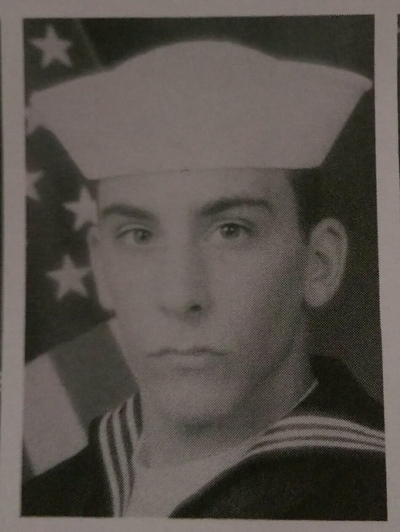
Right out of high school, Johnny joined the Navy, inspired by his uncle, who launched and landed aircraft on a flight deck. For four years, he served, learning discipline and finding his footing. While stationed in San Diego, he met Joni, the woman who would become his wife just three months later — a partnership that has now lasted over 30 years.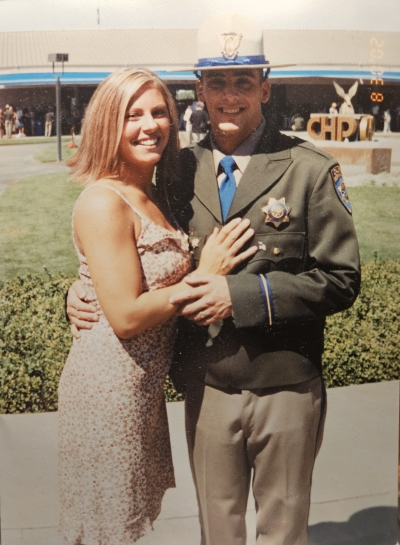 After his Navy service, Johnny spent six years as a correctional officer, a challenging but formative experience where he honed his understanding of people. Then, in 2002, he joined the California Highway Patrol and served until 2022.
Over those 20 years, he built a reputation as one of the best — calm under pressure, unshakable, and deeply committed to the people he served. He worked across several area offices, including Needles, Hanford, and Fresno, and spent time in the Central Division Commercial Unit. As a Public Information Officer, he also became one of the department’s most visible figures, appearing in news segments and media interviews, representing the CHP with clarity and professionalism.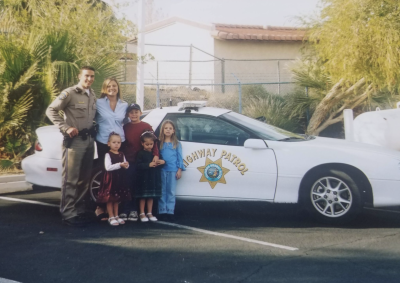 But behind the steady presence was a man who had witnessed more trauma than most could imagine: fiery crashes, ejections, dismemberments, and death notifications. “I’ve fought suspects, chased suspects, and I’ve lost brothers,” he said. “I kept going, but it all stayed with me.”
Like many first responders, Johnny didn’t talk about it. He compartmentalized. Buried it. Built walls.
“I was great at pushing through. You don’t stop to think about what you’re storing away.”
Then came the day in 2017 when everything changed. While doing yard work, a massive tree limb came crashing down out of nowhere and struck him directly. The impact shattered his jaw, fractured part of his eye socket, and broke multiple facial bones. 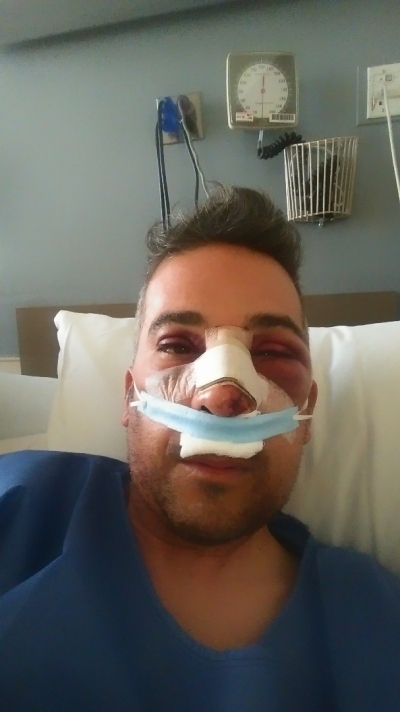 The accident required extensive reconstructive surgery and forced Johnny into a painful reckoning.
“That accident knocked out all of the safety firewalls in my brain,” he said. “It made me face all the horrific things I’d experienced in my life.”
Though he returned to duty for a while, the long-term toll of that incident, compounded by years of physical wear and tear on his body — like his back, which was annihilated from countless hours in a patrol car — eventually led to his medical retirement.
“I didn’t get to choose retirement,” Johnny said. “Much like my career, it chose me. And that was rough — mentally, physically, emotionally.”
That’s when a friend introduced him to Boulder Crest and the Struggle Well program. At first, Johnny was hesitant. He didn’t want therapy. He didn’t want to talk about feelings. But what he found was something entirely different: a community of veterans and first responders who had been through the fire and came out the other side stronger — and who believed in the possibility of Posttraumatic Growth.
“I felt seen,” he said. “I didn’t have to prove anything or explain myself. These were my people.”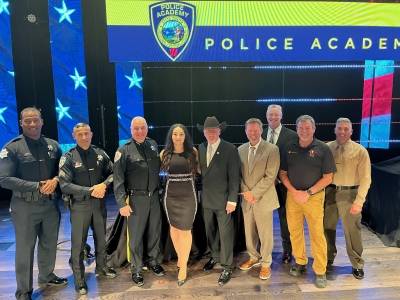 The program gave him a new framework. It helped him name what he was going through, understand his patterns, and apply the principles of growth to rebuild his life.
Eventually, Johnny came back to Boulder Crest — not as a participant, but as a Senior Guide with the Struggle Well program, showing others what it looks like to live with intention after trauma.
“I don’t show up with all the answers,” he said. “I just try to be real. To show them what’s possible when you face your truth head-on.”
He tells new participants that strength isn’t what you carry on the outside. It’s what you find inside when you think there’s nothing left.
Today, Johnny shows up differently for his family, his community, and himself. For the past two years, he’s focused on holistic neurological and metabolic health. He continues to mentor and guide others through the process of healing, often sharing his insights into physical and mental well-being.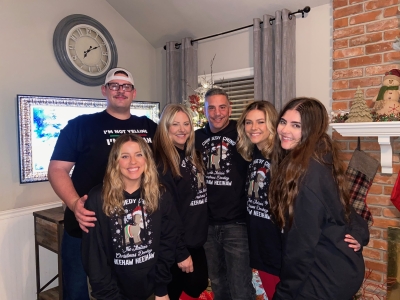 He’s still a leader. Still a steady presence. But now, instead of holding the line with silence and stoicism, he holds it with courage and compassion.
In doing so, he gives others permission to do the same.
“You don’t know how strong you are,” Johnny says, “until you have to use strength.”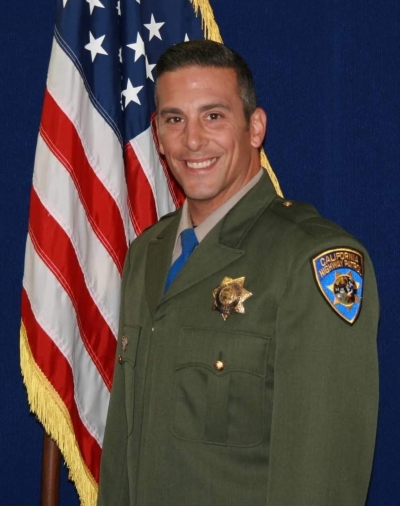 There’s no doubt — Ponch and Jon would be proud.
To learn more about Struggle Well and how you can begin your own journey toward Posttraumatic Growth, visit www.bouldercrest.org.
Your support powers life-changing programs offered at no charge to veterans, military, first responders, and their families. With your help, our Warriors won't just survive — they'll thrive.

We have received your email sign-up. Please tell us more about yourself.