Your Gift. Our Mission. Their Future.
DONATE TODAY. Invest in the PTG programs that are transforming mental health for our nation's heroes.
Make a Gift
There are certain people whose work changes the way we understand the world. And then there are the quieter truths — the ones revealed only after you sit with someone long enough to understand how their life shaped the questions they chose to ask in the first place.
Dr. Richard Tedeschi is widely known as the co-founder of Posttraumatic Growth (PTG), the groundbreaking psychological framework that explores how people can experience profound positive change through struggle. Alongside Dr. Lawrence Calhoun, his research would eventually influence clinicians, researchers, military communities, first responders, healthcare systems, and organizations around the world — including Boulder Crest Foundation, where PTG forms the foundation of every program and training experience.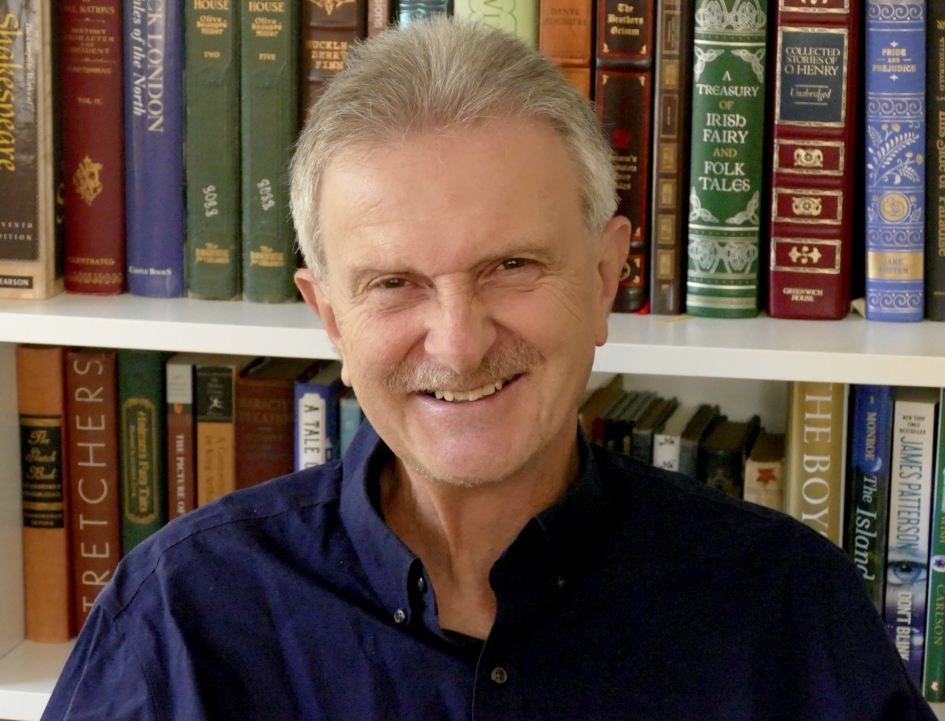
But long before the research papers, keynote stages, and global recognition, Rich Tedeschi was simply a kid growing up in southwestern Connecticut in a large Italian family where stories, relationships, and hardship were woven closely together.
His father was the youngest of nine children. His grandmother died when his father was only four years old, and soon after, Rich’s grandfather left the family and returned to Italy, leaving the siblings to largely raise one another. It was a difficult upbringing marked by loss, struggle, and strength long before anyone would have used language like Posttraumatic Growth to describe it.
Rich did not initially imagine himself becoming a psychologist. As a young man, he thought he would become an engineer. He loved building things and gravitated toward science and structure. But somewhere along the way, another pattern began to emerge.
People talked to him.
Even as a teenager, friends seemed to trust him with things they did not share elsewhere. He became, in his own words, “a good guy to talk to.”
At the same time, life introduced him to profound grief.
During his senior year of high school, Rich lost both his father and the first girl he ever loved within months of each other. The losses altered him. Years later, reflecting on those experiences, he would describe them as something that “tenderized” him — experiences that deepened his understanding of pain and allowed him to sit with others in theirs.
Those experiences did not point him immediately toward Posttraumatic Growth. In many ways, they simply opened him to people.
As an undergraduate at Syracuse University, professors recognized both his curiosity and his potential. Faculty mentors invited him into graduate-level statistics and psychology courses while he was still an undergraduate student. Another professor brought him into a graduate research lab, where Rich found himself surrounded by doctoral students, immersed in research and conversation that felt deeply meaningful to him.
Eventually, graduate school at Ohio University and clinical training at the University of North Carolina brought him south, where he later joined the faculty at UNC Charlotte.
At first, his research focused largely on environmental behavior and interpersonal trust — important work, but work that did not fully connect to what he was experiencing as a clinician in private practice.
Then came a turning point.
After earning tenure, Rich found himself asking a different question: What kind of work actually mattered most to him?
At UNC Charlotte, he began having conversations with fellow psychologist Dr. Lawrence Calhoun, who had been studying crisis, trauma, and bereavement. Rich, meanwhile, found himself increasingly interested in another side of human experience — not simply how people suffer, but how they become wiser, more compassionate, and more fully themselves through life’s hardships.
“The reason I became a psychologist was I wanted to know how people do well in life,” Rich said. “The people who do particularly well in spite of the fact that they’ve got difficult life circumstances always intrigued me.”
Together, the two psychologists began asking questions much of the trauma field was not asking at the time.
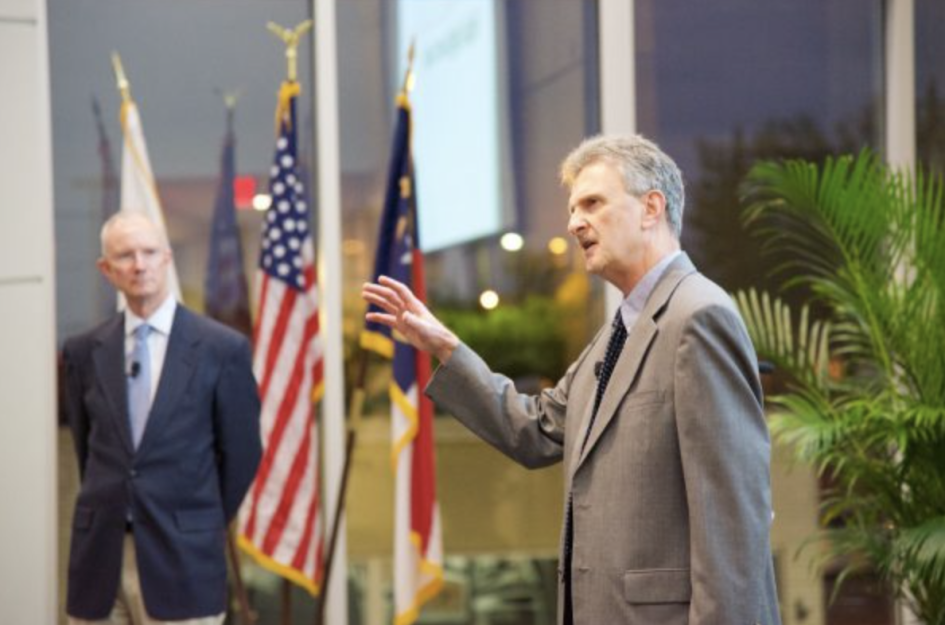 “What if we looked at the flip side of these experiences?” Rich recalled. “Why don’t we try to figure out how people become wise?”
So they started listening.
They interviewed bereaved parents. People who had become paralyzed. Individuals who had lost their eyesight. Survivors of devastating accidents, illnesses, and life-altering events who, despite everything, had somehow found a way to move forward with meaning and purpose.
And again and again, they heard something unexpected.
People were not only describing pain.
They were describing transformation.
“We were somewhat surprised to find that people were telling us stories of what made the difference — how they became way better people as a result of going through these experiences,” Rich said. “Some people even told us they didn’t regret the fact that they had been through some of these things.”
The more they listened, the clearer it became that growth after trauma was not rare. In fact, it was common. But almost no one was talking about it.
“One of the problems in the trauma community,” Rich explained, “is that traditionally nobody’s asked the question about growth. We focused more on symptoms and the negative things.”
For many people, simply being asked those questions became healing in itself.
“So many people told us it was the first time anybody had shown interest in that part of their lives.”
Over the next decade, Rich and Lawrence worked to better understand the process behind these experiences. They developed research models, assessment tools, and eventually the language that would become known around the world: Posttraumatic Growth.
What began as a research question slowly became a movement.
And years later, that movement would find a home at Boulder Crest Foundation.
When Rich first connected with Boulder Crest founder Ken Falke and later with CEO Josh Goldberg, he immediately recognized something fundamentally different about the organization’s approach to trauma and healing.
Boulder Crest was not simply trying to reduce symptoms or help people return to baseline functioning. It was building programs rooted in the belief that struggle could become a catalyst for transformation. Not by minimizing pain, but by helping people rebuild their lives with greater purpose, connection, appreciation, and strength.
Together, Rich, Josh, Ken, and the Boulder Crest Institute for Posttraumatic Growth helped shape programming and curriculum that translated PTG from theory into lived practice.
 That work would eventually inform Warrior PATHH, Struggle Well, and a growing ecosystem of peer-led training programs grounded in the science and practice of Posttraumatic Growth — all offered at no cost to participants.
Today, those programs have impacted tens of thousands of veterans, first responders, service members, and their families across the country.
At Boulder Crest, Rich’s research expands beyond journals or academic conferences. It lives in human beings.
It lives in the combat veteran who discovers he is still capable of connection after years of isolation.
In the first responder who finally understands that asking for help is not weakness.
In the parent rebuilding a relationship with their child.
In the participant who walks onto Boulder Crest property believing they are broken — and leaves with a new understanding of who they can become.
And through it all, Rich has remained what he has always been at his core:
A listener.
“I don’t know how many times in my career I’ve heard people say, ‘I’ve never told anyone this before,’” Rich shared. “What an honor to be in a position where someone trusts you with something that they’ve been unable to talk to other people about.”
That perspective — one grounded in humility, curiosity, and human connection — remains central to how Rich understands both psychology and growth itself.
At Boulder Crest, where PTG serves as the foundation for peer-led training programs offered to veterans, first responders, service members and their families, Rich’s work continues to ripple outward through thousands of lives.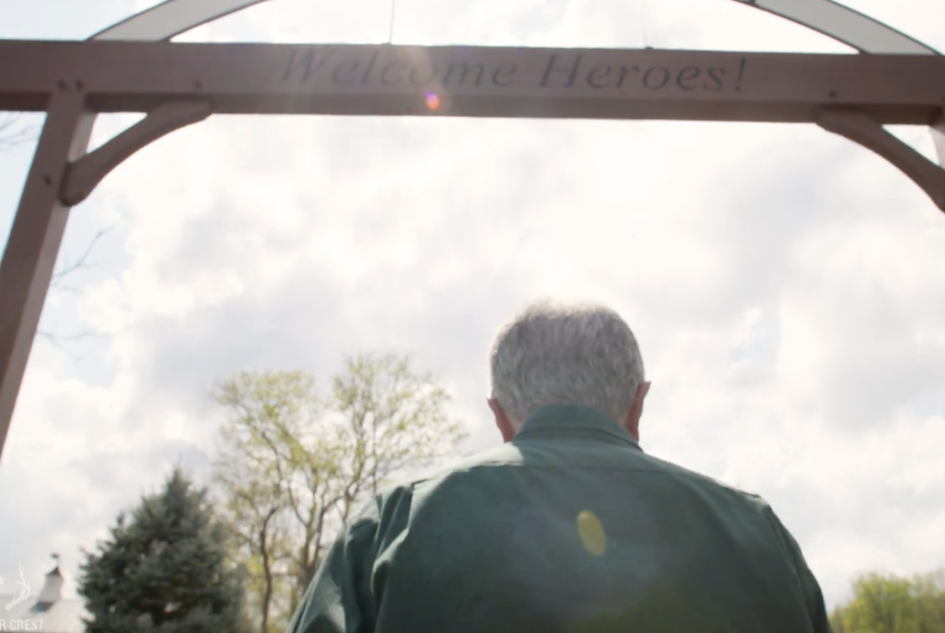 But perhaps one of his most important insights is also one of the simplest:
Human beings are not isolated stories.
We are shaped by family histories, relationships, mentors, heartbreak, chance encounters, and moments we often do not fully understand until much later. Our lives are not linear. They are layered narratives filled with people who leave fingerprints on who we become.
And maybe that is part of what Posttraumatic Growth ultimately asks of us.
Not to erase struggle. Not to minimize pain. Not to pretend hardship is somehow good. But to recognize that within even the most difficult experiences, there may still be the possibility for meaning, connection, wisdom, and transformation.
“It’s been very gratifying,” Rich said, reflecting on the journey. “From something people didn’t want to know about or think about… to something people all around the world are interested in.”
To learn more about Dr. Richard Tedeschi’s research on Posttraumatic Growth and the work of the Boulder Crest Institute for Posttraumatic Growth, visit bouldercrest.org and explore the growing body of science helping reshape how the world understands struggle and transformation.
You can also hear more from Rich — including the deeply personal experiences that shaped his life and work — in his episode of the Struggle Well Podcast.
Your support powers life-changing programs offered at no charge to veterans, military, first responders, and their families. With your help, our Warriors won't just survive — they'll thrive.

We have received your email sign-up. Please tell us more about yourself.