Your Gift. Our Mission. Their Future.
DONATE TODAY. Invest in the PTG programs that are transforming mental health for our nation's heroes.
Make a Gift
As a Senior Warrior PATHH Guide, Travis Gribble has watched it happen dozens of times.
A group of strangers arrives from all corners of the country carrying their own stories, experiences, and burdens. At first, many keep their guard up. They sit back, observe, and quietly assess the people around them, unsure of what the week ahead will hold.
Then, somewhere in the middle of the program, something begins to change.
The conversations deepen. The laughter comes easier. People start recognizing themselves in one another’s stories and realize they are not as alone as they thought. The weight they’ve been carrying doesn’t disappear, but it becomes lighter somehow, shared among people who understand.
Around Boulder Crest, they call it “the shift.”
It’s one of Travis’s favorite parts of the job.
What makes it especially meaningful is that he recognizes it because years ago, it happened to him too.
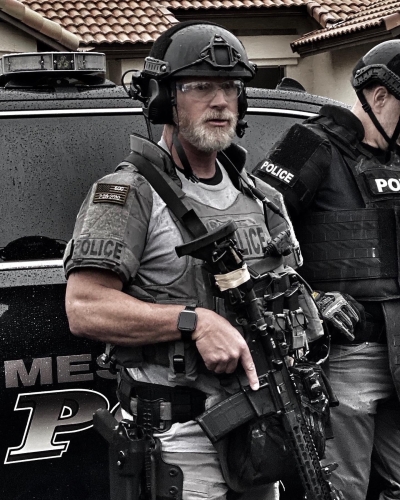
Long before he became a guide, Travis spent more than two decades in law enforcement, including years as a SWAT operator and team leader with the Mesa Police Department in Arizona. Like many first responders, he built a career around helping others through some of the worst moments of their lives.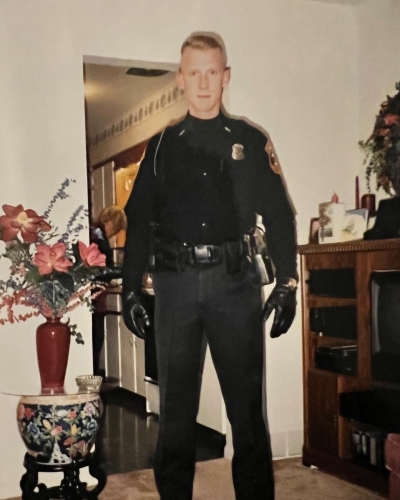 In many ways, that instinct had been with him long before he ever pinned on a badge.
Growing up in Michigan, Travis learned early what it meant to take care of other people. His childhood was often chaotic, and after his father left when he was young, he found himself becoming fiercely protective of his mother. Looking back now, he can see how those experiences shaped him. He became someone who watched for danger, anticipated problems, and felt responsible for the people around him.
So when a local police officer invited him on a ride-along shortly after high school, something clicked.
The shift wasn’t particularly dramatic. There were no Hollywood-style pursuits or life-or-death rescues. But as Travis watched the officer move through a night of routine police work, solving problems and helping people navigate difficult situations, he saw a path forward for himself.
For the first time, he could picture a future built around service.
That desire carried him through more than twenty years in law enforcement, from small departments in Michigan to one of Arizona’s largest police agencies. Along the way, he developed a reputation for being dependable, capable, and calm under pressure.
What he didn’t realize was that the same qualities that made him effective on the job were also making it harder to recognize what was happening beneath the surface.
Like many first responders, Travis learned to compartmentalize.
The difficult calls went into one box. The tragedies into another. Whatever emotions came with them could be dealt with later — if they needed to be dealt with at all.
For years, that approach seemed to work.
Then, in 2016, something changed.
During an operation involving a child who had been trafficked, Travis came face-to-face with a young victim. He had spent years pursuing criminals and responding to difficult situations, but this was different. Standing next to that child made the reality of what she had endured impossible to keep at arm’s length.
The call became one of the first cracks in a system that had held together for a long time.
Over the next several years, the weight continued to build.
Sleep became harder. Alcohol became an increasingly common way to cope. Calls that once rolled off his shoulders began following him home. The emotions he had spent years suppressing started forcing their way to the surface.
Still, he did what so many first responders are taught to do.
He kept going.
By 2021, Travis was serving as a SWAT team leader when his team responded to a hostage rescue call. They entered the home believing there was still a chance to save lives. Instead, they discovered everyone inside had already been killed.
The incident hit hard, but it wasn’t just that one call. It was the accumulation of years spent responding to tragedy, absorbing other people’s pain, and carrying a level of responsibility no single person could ever fully control.
 For Travis, the bucket had finally overflowed. So, for the first time in his career, he reached out for help.
Through therapy and EMDR, Travis began doing the difficult work of addressing what he had spent years avoiding. The treatment helped. It softened some of the sharpest edges and gave him practices to better understand what he was experiencing.
But even after receiving a PTSD diagnosis and making meaningful progress, something still felt incomplete.
After retiring from law enforcement, Travis moved to a small town in Montana surrounded by mountains and wide-open spaces. The plan was simple: slow down, stay away from the chaos, and leave that chapter of life behind.
Instead, he found himself waking up angry and disconnected despite living in one of the most beautiful places he had ever seen.
“I thought maybe this was as good as it gets,” he recalled.
The symptoms had improved, but he wasn’t thriving. He had learned how to manage what he was experiencing, but he hadn’t yet discovered what it meant to truly move forward. Then came another shift.
At the invitation of Boulder Crest’s Joe Wood, Travis attended what was then called the Struggle Well Experience.
He arrived skeptical.
After all, he had already done the therapy. He had already put in the work. He wasn’t sure there was anything left for someone to teach him.
What he discovered instead was an entirely different way of looking at struggle.
For the first time, Travis was introduced to the science of Posttraumatic Growth and the idea that healing wasn’t simply about reducing symptoms. It was about building a meaningful life in the aftermath of adversity.
Just as importantly, he found himself surrounded by people who understood. People who spoke the same language. People who had walked similar roads. People who knew what it felt like to carry things they couldn’t easily explain.
For the first time in a long time, he realized he wasn’t alone.
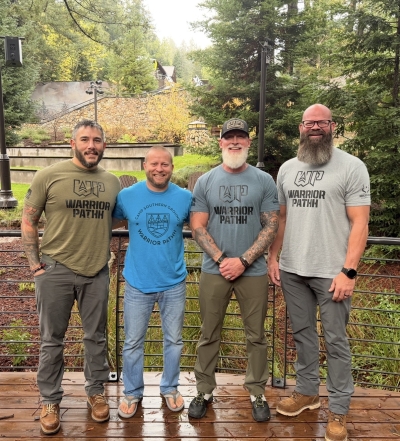 That week didn’t erase the difficulties of his past. It didn’t magically solve every problem.
What it did was restore something he thought he had lost. Hope.
Today, when Travis watches the shift happen in a Warrior PATHH class, he’s not just witnessing growth in someone else. He’s seeing proof of something he once struggled to believe in himself.
When participants arrive guarded and skeptical, Travis understands. When they sit back with crossed arms, unsure whether anyone could possibly relate to what they’re carrying, he understands that too.
Years ago, he was sitting in those same seats.
He remembers what it was like to believe he should be able to handle everything on his own. He remembers how isolating it felt to carry experiences that seemed impossible to explain to anyone who wasn’t there. And he remembers the moment he realized that all the strength that had helped him survive was no longer enough to help him move forward.
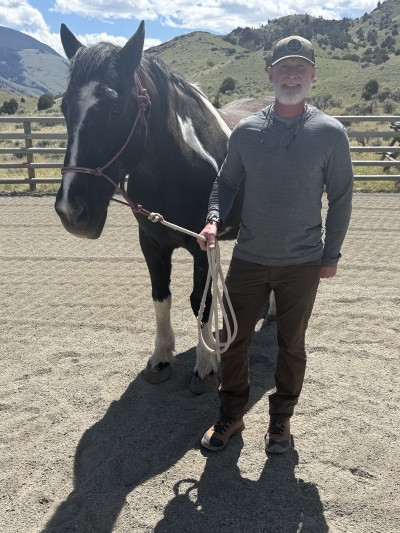 Most of all, he remembers what happened next. The shift.
For most of his life, Travis believed being the protector meant taking care of everyone else. Now he understands something different.
Sometimes the bravest thing a person can do is stop pretending they have to carry everything by themselves.
And sometimes the most important shift of all is realizing that you were never meant to.
For Travis, growth didn’t happen all at once. It happened through a series of small shifts — moments that challenged what he believed about strength, struggle, and what was possible after trauma. To hear more of his story, listen to his episode of the Struggle Well Podcast. And if you’re ready to take the next step in your own journey, learn more about Warrior PATHH and Struggle Well at bouldercrest.org.
Your support powers life-changing programs offered at no charge to veterans, military, first responders, and their families. With your help, our Warriors won't just survive — they'll thrive.

We have received your email sign-up. Please tell us more about yourself.