Your Gift. Our Mission. Their Future.
DONATE TODAY. Invest in the PTG programs that are transforming mental health for our nation's heroes.
Make a Gift
For nearly 50 years, Art Grau kept Vietnam in the attic.
Not literally all of it, of course. Some things followed him home whether he wanted them to or not — the memories of friends who never made it back, the anger of returning to a country that seemed to blame him for a war he didn’t start, the nightmares that occasionally pulled him from bed.
But the things he could pack away, he did: his uniform, his photographs, his stories.
When Art returned home from Vietnam in 1969, he made a decision: Those four years were over.
He went to school, earning undergraduate and graduate degrees, before becoming a speech-language pathologist, drawn to a career helping people after witnessing so much destruction. He married Kathy, raised a family and built a good life. And through it all, almost no one knew he had served in Vietnam.
“I put everything up in the attic,” he said. “I told no one.”
For decades, that seemed to work. Until, eventually, it didn’t.
There were moments when the past pushed its way back in. During one particularly difficult period, Art sought professional help after, as he describes it, he “crashed.” Even then, he talked about everything except Vietnam.
Kathy knew better.
“You’ve got to talk about it,” she told him.
Once Art started, the words poured out — stories he had spent decades refusing to tell, memories of arriving in Vietnam just as the Tet Offensive erupted, flying missions over enemy territory gathering intelligence and losing five friends before finally boarding the plane home.
During sleepless nights, he began writing some of those memories down, slipping out of bed so he wouldn’t wake Kathy. One page became another, and then another.
Years later, those pages would become his book, We Gotta Get Out of This Place: One Soldier’s Long Journey Home.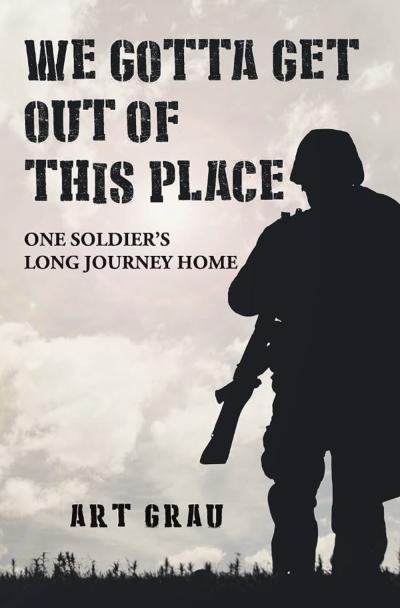
But the most transformative chapter of Art’s story began somewhere else entirely.
It began in a parking lot.
In 2016, Kathy learned about a Welcome Home Vietnam Veterans event hosted by Gilchrist in Baltimore and insisted Art attend.
On the drive there, Art found himself hoping for just about any reasonable excuse not to go — a heart attack, a stroke, three flat tires. He later described the prospect of attending as roughly as appealing as “a hemorrhoid transplant.”
He made it all the way to the parking lot before stopping, sitting in his car and trying to think of a way out. Something eventually convinced him to open the door, and as Art approached the building, people began reaching for his hand.
“Welcome home,” they said. “Thank you for your service.”
He had never heard those words before.
Nearly five decades earlier, Art’s actual homecoming had looked very different. After landing in California, he and other service members walked past crowds screaming obscenities at them from behind a chain-link fence. Art thought about the friends he had lost and felt a rage he would carry for years.
Now, standing outside a building in Baltimore, strangers were offering him the welcome he never received. And when he walked inside, he found hundreds of Vietnam veterans talking, laughing and enjoying one another’s company.
Art was stunned.
For nearly 50 years, Vietnam had lived inside him as something dark and painful, something best left untouched. Yet here were men who had endured experiences as difficult — and sometimes far worse — sharing stories and joy.
Art began talking to them, too. It was the first time since coming home that he had spoken with other Vietnam veterans about their experiences.
“That whole event just completely changed me,” he said. “I felt like my life started that day.”
And in many ways, another one did.
Art became involved with Gilchrist’s veteran programs and eventually began participating in Salute to Service ceremonies for veterans nearing the end of life. Even the Army uniform he thought was long gone resurfaced when his brother discovered it in an old paper bag in his basement.
The uniform came out of hiding.
So did Art.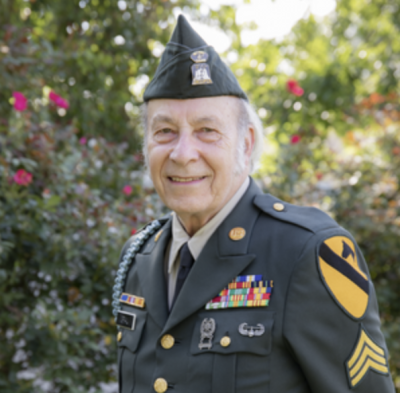
He has since participated in hundreds of ceremonies, standing beside veterans and their families during some of their most vulnerable moments, listening to their stories and honoring lives of service.
People sometimes ask how he can work around hospice patients knowing they are dying. Art sees it differently.
“If I didn’t, I’d never get to meet them,” he said. “I wouldn’t know their stories.”
That distinction says a lot about the man Art has become. Vietnam taught him, painfully, how fragile life can be. His journey afterward taught him what to do with that knowledge.
Years ago, Art found a chipmunk floating motionless in his swimming pool skimmer. He pulled the tiny animal out, placed it on the warm concrete and began gently pressing its chest. For 15 or 20 minutes, nothing happened, but Art kept going until, finally, he noticed a twitch.
Then water came from the chipmunk’s mouth. It began to move and, eventually, stood up and scampered away.
To Art, there was something profound in that tiny moment.
“This is what it’s about,” he remembers thinking. “It’s life.”
Perhaps that is also why Art keeps showing up for veterans. He knows he cannot undo what happened to them any more than he can change what happened to him. He doesn’t even describe himself as “fixed.”
“It’s a journey,” he said. “It’s a process.”
But he can offer something — a hand, a story, a welcome home that arrived 50 years late for him but might arrive at exactly the right time for someone else.
And perhaps he can offer the wisdom of a man who spent decades believing the strongest thing he could do was carry his pain alone, only to discover something far more powerful on the other side of it.
“If you’re in pain, fix it,” Art said. “Do something about it.”
Today, the memories he once packed into an attic have become a book. The uniform he hid away is worn in service to others. And the chapter of his life he spent decades trying to forget has become the very thing helping him bring meaning, purpose and joy not only to the years ahead of him, but to the lives of the veterans he is privileged to meet along the way.
Watch or listen to Art’s full conversation with Josh Goldberg and Britt Myers on the Struggle Well Podcast. To learn more about Warrior PATTH and Struggle Well training, please visit bouldercrest.org.
Your support powers life-changing programs offered at no charge to veterans, military, first responders, and their families. With your help, our Warriors won't just survive — they'll thrive.

We have received your email sign-up. Please tell us more about yourself.