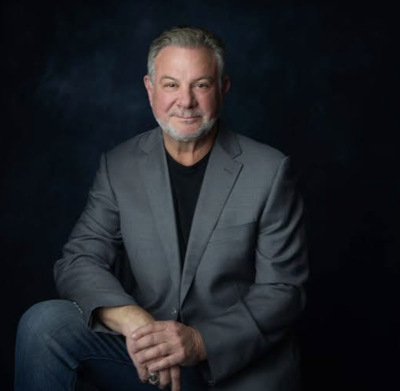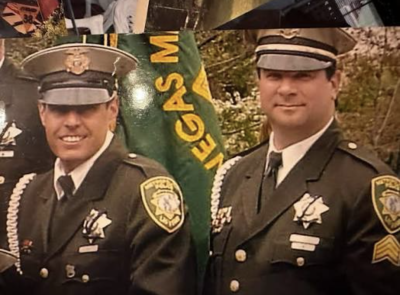
Randy Sutton became a police officer at 19 years old. There was just one small problem.
He wasn’t old enough to buy his own ammunition.
So while preparing to enter the New Jersey State Police Academy, the youngest police officer in the state had to ask his mother to buy his bullets.
It was a fitting beginning for a career that would be anything but ordinary.
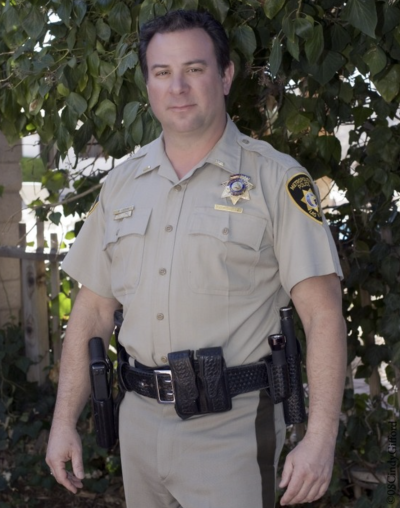
Over the next 34 years, Randy would build an extraordinary law enforcement career, serving in Princeton, New Jersey, and Las Vegas, Nevada. Along the way, he became one of the early and most recognizable faces of Cops, the groundbreaking reality television series that brought millions of Americans into the passenger seats of police cruisers for the first time.
The show was a cultural phenomenon, offering an unprecedented look at the unpredictable, occasionally hilarious, and often difficult realities of police work. Randy recognized its potential from the beginning. He believed that allowing the public to see officers as real people could change perceptions of the profession, and he later heard from officers who had joined law enforcement because they’d watched him on television.
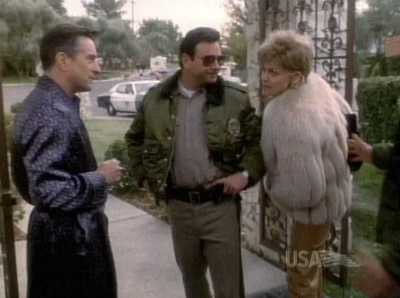
His appearances also opened some unexpected doors, including an audition for Martin Scorsese’s Casino. Rather than reading lines, Randy found himself swapping stories from the streets of Vegas with Scorsese and Robert De Niro. He got the part.
For a kid who once needed his mother to buy his ammunition, it was quite a career trajectory.
Yet through all the television appearances, movie roles, and remarkable experiences, Randy’s love for policing remained rooted in something he’d understood since childhood.
“I believe that I was a protector from the time I was a little kid,” he said.
Over 24 years with the Las Vegas Metropolitan Police Department, Randy eventually became a lieutenant, deliberately staying at a rank that allowed him to remain on the streets. He loved the work, the people, and the unpredictability of a city that rarely slept.
Then, one night, everything changed.
Randy was driving down Las Vegas Boulevard with a young officer at approximately 2:30 in the morning when he suddenly felt his brain slowing down. His speech became labored, and he knew immediately what was happening.
He was having a stroke.
Randy stopped the patrol car in the middle of the road and managed to tell his colleague to call for medical help. Moments later, he lost the ability to move or speak and collapsed onto the pavement.
He remembers lying there helplessly as tourists walked past.
“It was the most frightening moment of my life,” he recalled.
Randy survived, but doctors discovered a serious heart condition and warned him that another stroke or heart attack could happen at any time.
He knew his career in law enforcement was over.

After 34 years of service, Randy was facing a future he hadn’t planned for. His mother had died just weeks earlier, and the loss of his career left him struggling to understand who he was without the badge. Then came another blow.
According to Randy, the department he’d served for 24 years refused to cover his medical expenses and benefits. He spent the next year and a half fighting for the support he believed he’d earned.
When he confronted the department about his treatment, Randy remembers receiving a response that would stay with him forever.
“Randy, this isn’t personal, man. This is just business.”
For a man who had dedicated his life to protecting others, the experience was devastating. Randy felt abandoned by the very institution he’d given so much of himself to.
As word of his experience spread, police officers from across the country began contacting him. Some had been shot in the line of duty. Others had suffered devastating injuries or were struggling with posttraumatic stress. Many described feeling forgotten by their own departments.
Randy began to recognize that his experience was part of a much larger problem.
He reached out to organizations supporting fallen officers and their families, hoping to find similar resources for those who survived serious injuries. What he discovered was a tremendous need for someone to step forward.
So Randy did.
He founded The Wounded Blue, a national nonprofit dedicated to supporting injured and disabled law enforcement officers and their families.
Through peer support, education, advocacy, and its annual National Law Enforcement Survival Summit, the organization has become a source of connection for officers navigating some of the most difficult experiences of their lives.
To date, The Wounded Blue has helped more than 17,000 officers.
They know how much it means to have someone listen, offer encouragement, and stay beside you when the road ahead feels uncertain. Randy knows because he’s been there, too.
During his own darkest moments, it was the friendship and support of people who refused to abandon him that helped him move forward. Today, that same commitment connects his work with Boulder Crest Foundation, where a shared belief in the power of community and Posttraumatic Growth has created a meaningful partnership supporting first responders.
Randy has become a passionate advocate for helping officers find purpose through struggle, regularly connecting those in need with Boulder Crest’s Struggle Well programming.
And he has a pretty good sense of humor about his own transformation, proudly describing himself as the poster child for Posttraumatic Growth.
There’s something fitting about that description. Randy’s life has taken him from a small-town police department to the streets of Las Vegas, from Hollywood movie sets to a hospital bed where he wondered what his future might hold.
And somehow, his most meaningful work was still ahead of him.
Randy remembers what it felt like to lose the career he loved, to question his future, and to discover that the support he’d counted on wasn’t there. He also remembers the people who stood beside him when he needed them most.
What began as one officer’s painful experience has grown into a national community of support, giving thousands of men and women a place to turn when they need it most. Randy has watched officers find hope, rediscover their sense of purpose, and begin building meaningful lives beyond the injuries and experiences that once threatened to define them.
It’s a remarkable legacy for a man who once believed losing his badge meant losing the life he loved. Randy’s passion for protecting others is as strong as ever, and through The Wounded Blue, he’s found a way to carry that purpose into an entirely new chapter.
He may have retired from policing, but his impact on the profession is still growing.
For Randy, losing the career he loved became the beginning of a mission that has changed thousands of lives. Hear more of his remarkable story on the Struggle Well Podcast, discover the work of The Wounded Blue, and learn how Boulder Crest Foundation is helping first responders find strength and purpose through struggle.
Give strength & hope to those who serve
Your investment powers life-changing programs offered at no charge to veterans, military, first responders, and their families. With your help, our Warriors don't just survive – they thrive.